
The Story
Why it exists.
The beginning
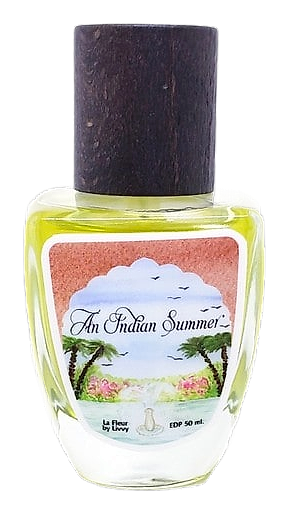
Olivia Larson grew up surrounded by the flowers and spices of India before moving to Colorado, where she built a perfume practice rooted in botanical traditions. The Indian Summer fragrance channels a very specific sensory memory, the late-season heat of the subcontinent, when summer's grip returns after the monsoon and the air hangs thick with lime blossom and curry leaf. It's the hour when the heat reaches its peak, when the afternoon light goes amber and everything slows. Larson's version of that moment is botanical rather than literal: a small-batch natural composition that captures the feeling of that place, rather than its postcard.
The heart of this fragrance relies on materials that rarely appear in mainstream perfumery, pandanus leaf, curry tree, white lotus. Each carries the aromatic signature of its origin rather than a generic tropical impression. Butter CO2 extract adds an unusual creamy richness that synthetic routes cannot easily replicate. The coconut reads more pressed-fruit than pina colada, while the jasmine and lotus carry the humid weight of a garden at dusk, not a resort spa.
The evolution
The opening arrives sharp and green. Fennel's vegetable bite cuts through lemon verbena's citrus brightness. It hits like the first breath of heat after a long spring, immediate and slightly medicinal. Within minutes, it cools as the heart opens. Jasmine and white lotus arrive warm and humid, supported by coconut's fatty cream and curry's soft spice. Coriander and ginger add lift without sharpness. By the second hour, the florals have deepened. Patchouli's earth settles beneath everything while styrax adds a faint resinous warmth. The drydown holds for hours. Patchouli, hay, and that styrax residue, something that stays intimate and close to skin long after the top notes have surrendered.
Cultural impact
An Indian Summer sits outside the mainstream. It is green and herbaceous in a way most summer fragrances avoid, with tropical florals and a lactonic warmth that some find unusual and others find essential. The fennel and curry tree notes are not typical blind-buy material, they require a certain willingness to meet the fragrance on its own terms. But for those drawn to natural perfumery and botanical complexity, it offers something the mass market rarely does: a composition built from materials that carry the aromatic signature of their origins rather than impressions of them.