
The Story
Why it exists.
The beginning
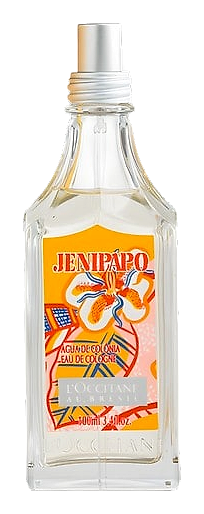
The Jenipapo fruit gave this fragrance its name and its soul. Native to the Amazon basin, the Jenipapo is a deep purple fruit used in everything from liqueurs to traditional remedies, its scent is earthy, slightly fermented, unlike anything in the standard perfumery vocabulary. Sophie Truitard, L'Occitane Au Brésil's perfumer, chose to work with it not for familiarity but for the challenge of translating something distinctly Brazilian into a wearable composition. The 2013 launch marked one of the house's earliest explorations of native Amazonian ingredients, preceding the formal L'Occitane Au Brésil sub-brand by several years. Jenipapo was an experiment: could a Brazilian fruit anchor a fragrance that felt both local and universally appealing?
What makes this composition unusual is its structural honesty. Most tropical fragrances hide behind a veil of aquatic notes or synthetic musks to achieve their freshness. Jenipapo lets the fruits speak plainly, watermelon as watermelon, mango as mango, no atmospheric softening. The piña colada note arrives not as a cocktail metaphor but as a sensory bridge between the bright top and the creamy base. Then lilac and jasmine enter, unexpectedly. They don't belong to the tropical register, they're more handkerchief than hammock. Their presence turns the heart from purely gourmand into something with a quiet floral argument. The milk and vanilla base doesn't overpower. It settles.
The evolution
The opening hits within seconds. Watermelon and bergamot arrive together, crisp, watery, the kind of bright that almost tingles. Citrus fruits sharpen it. For the first thirty minutes, this is pure summer hydration. Then mango begins to surface, sweeter and rounder, pushing the watermelon aside. The piña colada note emerges quietly, not as a drink but as an impression: coconut milk, pineapple, something slightly boozy at the edges. Jasmine and lilac appear around the forty-minute mark, threading through the sweetness with a green-floral lift that feels almost contradictory. The florals don't soften the fruit, they argue with it. That's the interesting part. By the second hour, the fruit has settled. Milk and vanilla take over, sandalwood providing a soft woodiness underneath. The drydown reads as warm skin, slightly sweet, intimate rather than announced. On most skin types, expect four to six hours. The sillage stays moderate throughout, present if you're close, absent from across the room.
Cultural impact
Jenipapo (Genipa americana) is a fruit native to the Amazon and other tropical regions of Brazil, deeply embedded in Brazilian culture and traditions. The fruit has been used for centuries by indigenous communities for its edible properties, natural dyes, and medicinal applications. In Brazilian folklore and traditional celebrations, jenipapo appears in rituals and local festivities. The fruit's deep purple-black color has been used as a body paint by indigenous peoples during ceremonies and hunting rituals. L'Occitane au Brésil's interpretation brings this culturally significant ingredient into modern perfumery, connecting contemporary scent culture with Brazil's rich botanical heritage and traditional knowledge.