The Story
Why it exists.
The beginning
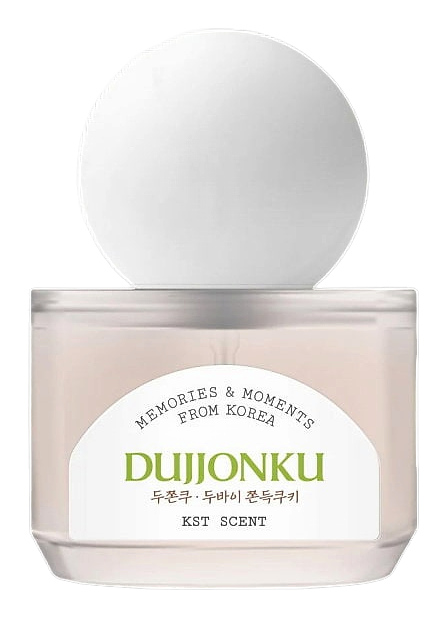
Dujjonku is a 2026 composition from KST SCENT, a fragrance house with perfumer James Nguyen listed as the perfume maker. The scent sits within a catalog that includes releases like Rice Cake, Hotteok, and Tang Hulu, names that lean toward recognizable Korean confections and kitchen memories. Where those names evoke sweets and street-side treats, Dujjonku reaches for something weightier on the nose. Jujube anchors the composition, a fruit that carries warmth and a faintly medicinal sweetness, and it is set against cocoa and frankincense, two materials that push the scent into drier, smokier territory. The result reads less like a confection and more like a quieter ritual object, something you might encounter in a still room rather than a bustling market.
The note structure pulls in two directions at once. Jujube and spun sugar in the opening recall familiar Korean tea-house confections, a sweet and almost cheery welcome. Frankincense, barley tea, and amyris pull toward temple smoke, toward something quiet and grounded, a moment where the candy dissolves and the incense steps forward. That tension is the interesting part of wearing Dujjonku, the way it moves between comfort and ceremony without settling into either one fully.
The evolution
The first thirty minutes feel almost like an incense ceremony interrupted by a confection. Cocoa powder and frankincense arrive together, and jujube adds a fruit-skin warmth that makes the opening less abstract than frankincense alone would be. Spun sugar gives a fleeting glassiness, a shimmer over the top that disappears quickly, which is the point. Within an hour, the composition pivots. The incense backs off. Barley tea, marshmallow, and white chocolate take over, and the scent goes from temple to tearoom. The barley tea is the surprise, a grainy, toasted note that reads like something brewed rather than baked. It keeps the gourmand reading honest. In the final hours, benzoin and Bourbon vanilla settle in with amyris and the cocoa CO2 extraction, and the whole thing turns into a warm, woody-soft skin scent. The sillage is moderate, so this is fragrance for the wearer and whoever leans in close. On a sweater the next morning, the drydown reads like bourbon vanilla and faint smoke, quiet but unmistakable.
Cultural impact
Dujjonku draws on jujube and frankincense as its central materials, pairing a fruit rooted in Korean food memory with a resin long associated with ritual and incense. The composition pushes toward something more contemplative than a straightforward gourmand, with cocoa, benzoin, and Bourbon vanilla giving the base a slow, smoky sweetness rather than a sugary one. Early community reaction has been mixed, with the single visible review on community platforms describing the scent in strongly negative terms, a reminder that unconventional chocolate structures tend to divide rather than unify.