The Story
Why it exists.
The beginning
On Ella was crafted as an olfactory dedication, a fragrance designed to capture something essential about the concept of femininity. Inspired by and dedicated to a woman who remains intriguing and undefined, this scent was built to speak to anyone who encounters it. The composition works like a quiet statement, layered and deliberate, offering a presence that invites interpretation rather than demanding it. It's a dedication expressed through the language of raw materials, a tribute that lets the wearer complete its meaning.
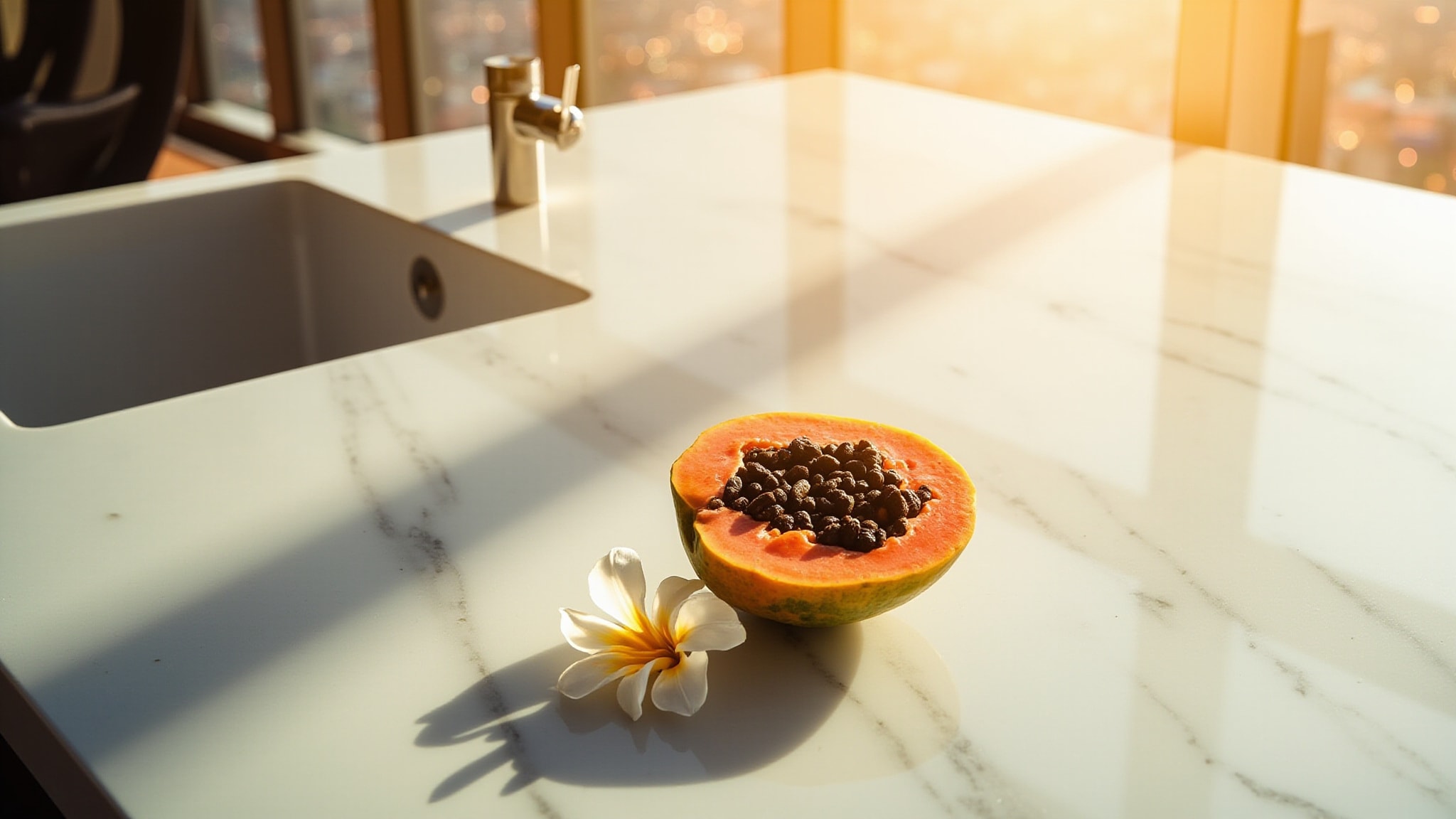
What makes On Ella interesting is the way it combines tropical sweetness with aromatic complexity. Papaya and apple suggest something ripe, almost decadent. But cassia, a spiced relative of cinnamon, cuts through the sweetness with a character that keeps the composition from tipping into pure softness. The florals that follow, freesia, lily of the valley, rose, are classic, even nostalgic, but they're arranged with careful attention to balance. It's fruity-floral with depth and purpose.
The evolution
The tropical notes arrive first, papaya bringing brightness and immediacy. Cassia and mandarin follow, the spice and citrus creating a warm opening before the florals take hold. Freesia dominates the heart, with lily of the valley and rose supporting. The transition from top to heart feels natural, with no jarring shifts. As time passes, the florals begin to soften and sandalwood and musk arrive, vetiver providing an earthy foundation while tonka bean adds a faint sweetness that prevents the base from becoming austere. Violet lingers longest, powdery and intimate, staying close to the skin. The composition unfolds gradually, revealing its layers one by one.
Cultural impact
On Ella sits in an interesting space, a 2001 fruity-floral from a Spanish fashion house that occupies its own corner of the market. It's the kind of fragrance that holds its own without competing for attention. That quiet confidence gives it a certain appeal. It's not trying to be modern by today's standards, and that's part of what makes it distinctive.