
The Story
Why it exists.
The beginning
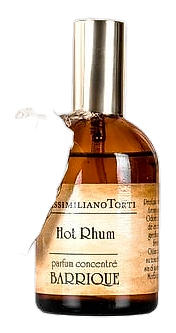
Hot Rhum arrived in 2009 from Massimiliano Torti. The name points straight at its heart: rum, rendered less like a mixed drink and more like a slow reduction poured over wood and smoke. There's no imagery of a Caribbean bar or a specific cocktail here, and that's the interesting part. The composition pairs rum with frankincense, cypriol, geranium, amber, benzoin, musk, Java vetiver, patchouli, guaiac wood, and cedarwood. Resin, wood, spice, and a warm rum accord shape the scent, with the listed notes moving between bright, earthy, woody, balsamic, and soft facets. Hot Rhum is built around this contrast: the recognizable character of rum alongside woods, resins, and a trace of green character from geranium.
The unusual part of Hot Rhum is the tension running through its structure. Frankincense, cypriol, and geranium establish the opening, with cypriol contributing a mineral character and geranium adding a green, lightly bitter edge. Rum appears in the middle of the composition, accompanied by amber and benzoin for warmth and sweetness. The listed base notes give the fragrance its deeper foundation: Java vetiver brings an earthy quality, patchouli adds density, and guaiac wood and cedarwood contribute distinct woody facets.
The evolution
Hot Rhum begins with frankincense, cypriol, and geranium. Frankincense contributes a resinous impression, cypriol brings a mineral quality, and geranium adds a green, slightly bitter accent. Rum then becomes more apparent, moving into the heart alongside amber and benzoin. This is where the composition's central contrast comes into focus: the warm, rounded character of rum meets the cooler mineral edge of cypriol, the green facet of geranium, and the resinous presence of frankincense. Amber and benzoin introduce sweetness that supports the rum without making it the only focus. As the scent develops, the deeper notes become more present. Java vetiver adds an earthy dryness, while patchouli contributes its characteristic dense, green-brown character. Guaiac wood and cedarwood extend the woody side of the composition, creating a firm contrast with the earlier freshness.
Cultural impact
Hot Rhum offers a distinctive point of entry into the niche fragrance landscape through its combination of rum, resins, woods, mineral notes, greenery, and soft amber materials. Rum gives the composition an immediately identifiable theme, while frankincense and cypriol add depth and a less obvious contrast. Geranium contributes a green, lightly bitter edge that keeps the note list from feeling entirely warm and sweet. The lower notes broaden the fragrance further: Java vetiver and patchouli bring earth and density, guaiac wood and cedarwood contribute different expressions of wood, and amber, benzoin, and musk add softness.
The House
Il ProfumiereIl Profumiere is an Italian niche perfume house that blends Florentine tradition with contemporary olfactory storytelling. The brand offers a curated catalogue of scents—such as Passiflora Rouge (2000) and Dubai Sahara (2008)—that aim to evoke specific places, memories, and moods. Each fragrance is presented as a compact, artful bottle, inviting collectors to explore a sensory map of Italy and beyond.
The Creator
Massimiliano TortiTorti’s signature technique, which he calls “olfactory stratification,” layers base, heart, and top accords in a way that invites the wearer to rearrange the perfume throughout the day. He favors natural absolutes, rare botanicals, and vintage extracts, often pairing Tuscan la…