
The Story
Why it exists.
The beginning
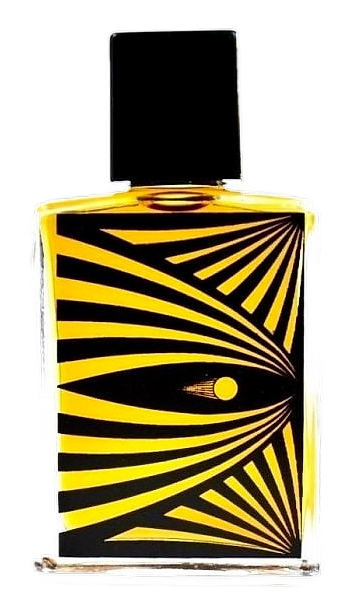
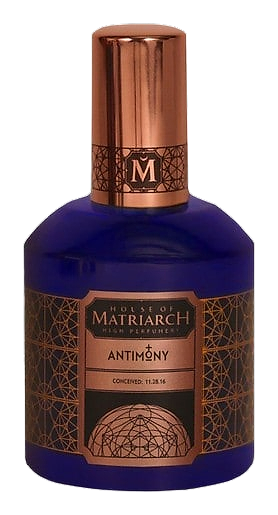
Antimony began as a collaboration between Christi Meshell and Michelyn Camen, Editor in Chief of ÇaFleureBon, created in 2016 to mark the publication's 7th anniversary. The brief: build a talisman. Not a fragrance to wear, but one to anoint with, a scent powerful enough to attract good fortune. The name comes from the mineral used since antiquity to rim the eyes in kohl, the original protective ritual, the very first cosmetic. Meshell reached for the materials that had been burned and blended across centuries to create that wisp of darkened smoke: charred frankincense, kewra, henna, Palo Santo, galangal, sandalwood ashes, spikenard, ghee, copal, oud, and rare attars of mitti, kadam, and rose.
The choice to build around kohl history is the unusual move here. Most incense fragrances stop at the resin, letting oud and frankincense carry the architecture. Antimony goes further back, into the apothecary, into the ritual of cosmetic preparation itself. The inclusion of mitti attar, a distillation of baked earth, alongside actual butter and henna, signals a perfumer working from material memory rather than market reference. The 111-note count is staggering on paper, but the composition is deliberately unified: every note serves the central image of something burning on a low altar.
The evolution
The first ten minutes feel like walking into a temple mid-ceremony. Copal and frankincense hit immediately, charred and dense, backed by the dry snap of galangal. There's no top-note politeness here, no citrus to soften the entry. Palo Santo and oud rise through the smoke like columns, and underneath, butter does something unexpected, it rounds the edges without sweetening them. By the thirty-minute mark the composition shifts from open flame to embers. Spikenard and henna take over, the henna lending a green, leafy dryness that keeps the whole thing from collapsing into pure resin. Then something surprising: mitti attar surfaces. That note of baked earth, warm clay pots in summer, threads through the heart and pulls the smoke down, grounds it. This is where Antimony stops being an incense fragrance and becomes something more rooted, more earthen, almost agricultural.
Cultural impact
Antimony was developed as part of ÇaFleureBon's 'Project Talisman,' a collaboration with independent perfumers. The kohl reference gives it a specific cultural anchor that most incense fragrances lack, connecting modern niche perfumery to thousands of years of cosmetic and ceremonial practice. Antimony's ancient mineral namesake, used to darken the rims of eyes as both adornment and protection, lends the composition a weight that purely resin-focused fragrances rarely achieve. The kadam attar, extracted from the blossoms of the kadamba tree, and mitti, distilled from sun-baked earth, both carry cultural memory into the bottle.