
The Story
Why it exists.
The beginning
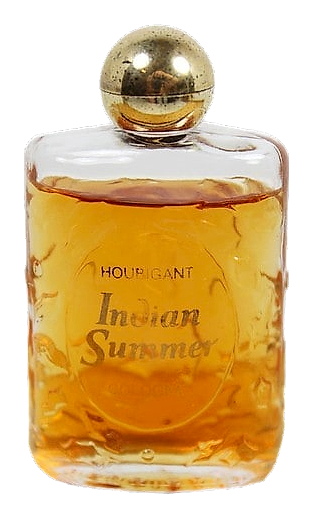
Houbigant opened its doors in 1775 and spent nearly two centuries defining what French perfumery could be. By 1972, the house had already given the world Fougère Royale, which invented an entire fragrance family. Then came Indian Summer. The name said everything: a season that shouldn't exist, warmth refusing to leave before its time. The perfumer leaned into that contradiction, honey sweet enough to taste, hay dry enough to crunch underfoot, aldehydes that lifted everything into something with presence. Not a quiet fragrance. Not a safe one. The composition walks a line between richness and earthiness, sweetness and crackling dryness, flowers woven through honeyed warmth.
Aldehydes give Indian Summer its signature lift, that bright, sparkling quality that makes the composition feel larger than its individual parts. The hay and hay spice combination is what sets it apart from other aldehydic florals. It's pastoral in a way that feels earned, not staged, dry stalks and golden light, the smell of a season running past its end. What's unusual is how the hay persists into the drydown rather than evaporating early. In most fragrances, hay is a fleeting top note. Here it threads through the entire experience, keeping the florals honest. The honey-rose-sandalwood heart is unmistakably 70s, full-bodied, generous, unapologetic about its own richness.
The evolution
The aldehydes arrive first, lifting everything with them, bright, immediate, almost fizzy against the skin. Then the hay enters, dry and golden, carrying the warmth of late summer sun on cut stalks. Spices follow: clove, cinnamon. The opening doesn't announce itself. It arrives. As the top notes settle, the heart opens, honeyed rose, sandalwood, incense. Warmth that feels like sunlight holding on past its welcome. Beautiful, but with something underneath that resists prettiness. The drydown stretches long. Honey lingers longest in the heart, but the base is where Indian Summer earns its hours: sandalwood, hay, hazelnut. It stays close to the skin, intimate and persistent, sometimes detectable the following morning on fabric. What surprises is the hay. It doesn't disappear, it settles into the composition like the last note on a piano, quiet and present.
Cultural impact
Indian Summer sits within Houbigant's lineage of aldehydic chypres, compositions with presence and structure. The hay, honey, and aldehydes combination reads as deliberate in a way that feels considered rather than accidental. What reads as vintage character in 1972 still reads as vintage character today, and for some wearers, that's precisely the appeal. Warmth with an edge. Beauty that remembers where it came from. The fragrance occupies a space where time becomes irrelevant, where the techniques of another era feel just as valid now as they did then.