The Story
Why it exists.
The beginning
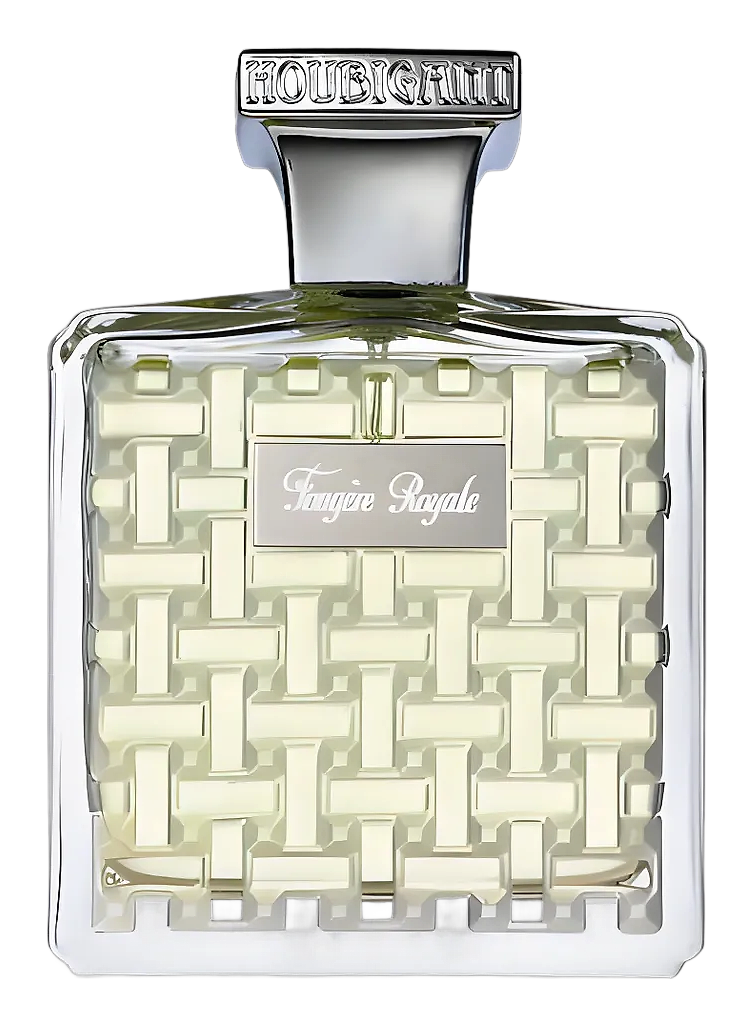
Houbigant didn't create Fougère Royale in 2010, they remembered it. The house had the original 1882 formula, the one that invented the fougère family and gave modern masculine perfumery its grammar. What they needed was someone who could translate that grammar into contemporary speech without losing the accent. Rodrigo Flores-Roux, then head perfumer at Givaudan, got the call. His brief was deceptively simple: keep what matters, modernize what needs it, and don't apologize for the past.
The result lives in the herbs. Mediterranean in spirit, Moroccan chamomile in particular, a bitter, almost medicinal note that gives the lavender something to argue with. The heart keeps geranium and rose in conversation with carnation and cinnamon, a warmth that reads as skin-adjacent without being literal. At the base, coumarin from tonka beans and oakmoss absolute recall what made the original revolutionary. Mastic absolute adds a quiet turpentine edge, resinous, green, slightly sharp, that stops the whole thing from becoming a museum piece. This isn't a recreation. It's a translation.
The evolution
The opening hits fast: lavender and bergamot, clean and immediate. Within ten minutes, the chamomile arrives, a slight bitterness that catches you off guard if you weren't expecting it. The herbal quality builds through the first hour, geranium and green notes dominating while the spice (cinnamon, carnation) quietly layers underneath. By hour two, the heart has settled into something warmer. Rose appears. Then fades. The base takes over gradually: coumarin's sweet hay, oakmoss doing its mossy thing, amber softening everything. Patchouli adds depth without darkness. The drydown holds for hours, 6 to 8 on most skin types, projecting moderately, intimate rather than theatrical. When it finally fades, it leaves that faint tonka-and-moss memory on fabric that makes you want to wear it again.
Cultural impact
The 2010 Fougère Royale occupies a singular position: a heritage revival that doesn't hide behind nostalgia. It attracted both purists who wanted the classic structure and newcomers who wanted a modern aromatic. Wearers describe it as the scent of someone who walks in quietly and stays, not a statement fragrance, but a confident one.