
The Story
Why it exists.
The beginning
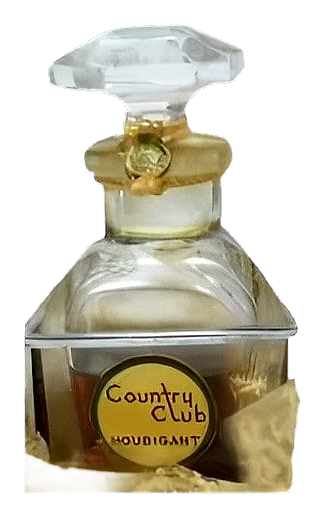
Country Club arrived in 1937, a year when the world still dressed for dinner and perfumers still believed a woman should smell like a lady. Houbigant, the Parisian house behind it, understood the moment perfectly: people wanted to smell like a Sunday well spent. The composition was designed for women, but the attitude behind it belonged to anyone who knew what a well-pressed day looked and smelled like. Crisp. Civilized. A little bit knowing. There is something almost architectural about the way it opens, clean and deliberate, before the softer registers settle in. It behaves like a fragrance that knows its own name, confident in its place on the vanity and equally at home on the wrist of someone who has better things to do than announce themselves.
What makes Country Club worth attention is its refusal to shout. The aldehydes lift the florals into something sparkly and bright, a move that transforms petals from pretty into electric, giving the whole composition a lifted, almost luminous quality. The heart is built on classical white florals, generous and layered, while the base pulls toward something soft and hushed, almost powdery, that keeps the whole composition from tipping into sweetness. It is a portrait of restraint executed with intent.
The evolution
The opening belongs to the aldehydes: a clean, bright fizz that reads almost like carbonation over skin. It is brisk, almost bracing, and unmistakably precise in its delivery. Within a short while, the white florals take over, and the scent settles into its true register: petals, soap-fresh linens, the kind of floral that smells pressed rather than picked. A thread of warmth runs through the composition, softening the sharper edges and giving the whole thing a sunnier cast. As the hours pass, the base takes over, and the scent quiets down into something powdery and intimate. It stays close to skin for the rest of the day, with a faint trail that suggests warm fabric rather than perfume. The next morning, a whisper of it still clings to the collar, ghostly but recognizable, like a trace of someone who left the room an hour ago.
Cultural impact
Country Club reads as a confident, polite refresher rather than a provocation. The composition sits comfortably inside a recognizable tradition of white florals designed for women who wanted their grooming to feel considered, a Sunday-afternoon elegance translated into scent form. Its profile carries the crispness of pressed linens, the warmth of skin in sunlight, and the soft hush of powder at the close, the same vocabulary that runs through a great deal of mid-century feminine perfumery without ever feeling derivative.