
The Story
Why it exists.
The beginning
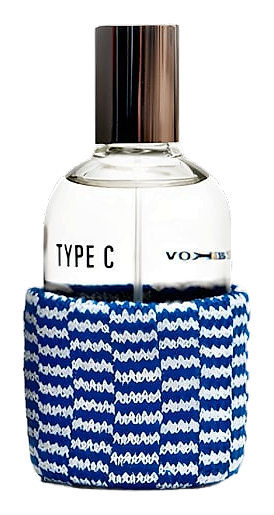
Type C is Copenhagen, bottled. Henrik Vibskov launched it in 2011 as part of the Type series, a set of compositions intended to represent fragrances from different cities. C stands for the designer's home. The inspiration is concrete: the salty air and open waters around Copenhagen, the kind of atmosphere that hangs over the harbour at the edge of the city. The scent opens with the same cleanness you'd get standing on the ferry dock at sunrise. Bergamot, Amalfi lemon, and mandarin give it that just-squeezed brightness, then an ozonic accord moves in to do the heavy lifting. Not the sea exactly. The feeling of the sea, with the city still behind you and the wind picking up.
The Type series treats cities as raw material. B and D map other places, but C is the anchor because it starts at home. This is the scent that ties the collection back to its point of origin, the composition where the designer's relationship to place is most direct. Each Type is meant to be its own thing, not a chapter. C just happens to be the one where the designer looks out his own window. The letter does double duty as both label and location, shorthand for a city and for everything that city carries in its air and water.
The evolution
The citrus hits fast and doesn't linger. Fifteen minutes in, the bergamot and lemon have already stepped back, and what's left is the ozonic accord doing its work. This is the strange part. It smells less like a note than like a change in air pressure. Cool, slightly metallic, with a saline edge that makes you think of cold stone and rope. The ozonic accord holds the center of the composition for most of its life, never quite resolving into anything you can name. It just stays there, humming at a register that reads as outdoor air rather than perfume. As the hours pass, the seagrass starts to surface, and the composition tilts greener. Less harbour, more dune. The seagrass brings a vegetal coolness that settles under the marine shimmer, softening the metallic edge with something more organic. The woody notes in the base never fully announce themselves.
Cultural impact
Type C reads as a daytime composition, a warm-weather scent shaped around openness and movement rather than density or seduction. It's the kind of thing you reach for when you want to smell like a clean shirt after a ferry ride, not like an evening. The ozonic accord carries the whole thing, keeping it at a register that feels more like weather than like perfume. There are no dense basenotes pulling you indoors, no heavy resins insisting you stay put. It belongs to outdoor light, to travel, to the moment before a coat goes on.