The Story
Why it exists.
The beginning
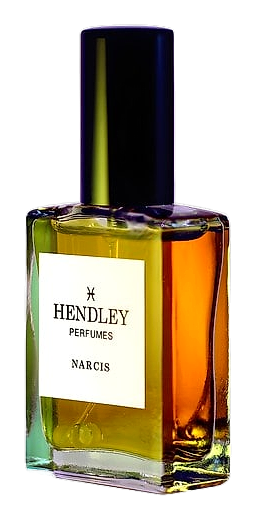
Hans Hendley has always had a complicated relationship with Narcissus. Not the mythology, the flower. Most people encounter it once in a lifetime, cut in a vase, fleeting. Hendley wanted something else. He spent years studying the Narcissus absolute, learning its honeyed and hay-like qualities, its waxy texture that resists easy description. Most perfumers reach for white florals when they want presence, jasmine, tuberose, gardenia. Hendley reached past them. The result is Narcis. Released in 2019 as part of the Laboratory Series, this was Hendley's answer to the question of what Narcissus actually smells like when you stop trying to improve it. He didn't reach for accords that would soften the blow or extend the wear time through familiar routes. He used beeswax, the same beeswax he knew from the cedar forests of his childhood in East Texas, to amplify the flower's waxy, animalic character. The Narcissus isn't prettified. It's preserved.
What makes Narcis unusual isn't any single note, it's the structure. The heart of Narcissus absolute carries honeyed and hay-like qualities that most perfumers treat as a liability. Hendley leans into them. The beeswax amplifies the waxy character rather than softening it. The orris and tuberose provide the buttery, almost edible depth that prevents it from reading as merely green. The pseudo-chypre accord is what keeps the whole thing from collapsing into sweetness. A bitter, grassy, earthy quality cuts through the florals, present but not aggressive, grounding what could have been delicate. This is a fragrance that smells like a decision was made: we are not going to make this easy or comfortable.
The evolution
The opening is immediate and waxy. Jonquil absolute and beeswax arrive together, the smell of something yellow and warm at room temperature. There's no citrus to lighten it, no aldehydes to modernize it. Just wax and petal. Within the first hour, Narcissus takes over. This is not a polite floral. It smells honeyed, faintly animalic, with a hay-like quality that suggests something pastoral and slightly unkempt. The buttery florals, orris root, tuberose, layer underneath, but they're not the point. They're texture. The chypre accord is what keeps it honest: bitter, grassy, earthy. By hour two, the florals have settled. The drydown is powdery iris and the warmth of beeswax on skin. Musk emerges slowly, keeping everything close. This is not a fragrance that announces itself across a room. It's a fragrance you discover when someone leans in. The beeswax lingers longest, a faint waxy warmth that stays on skin for hours after the florals have gone quiet.
Cultural impact
Narcis occupies unusual territory: a discontinued, limited-run fragrance by a self-taught Brooklyn perfumer that attracted a small, committed following precisely because it refused to behave like a conventional floral. The beeswax-narcissus pairing is uncommon enough to provoke strong reactions, wearers either find it singularly distinctive or quietly move on. The rarity of 33 bottles means most people who want it will never find it. For those who do, the experience is shaped by proximity, this is not a fragrance that announces itself. It rewards curiosity.