
The Story
Why it exists.
The beginning
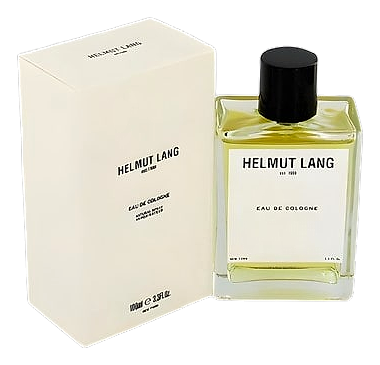
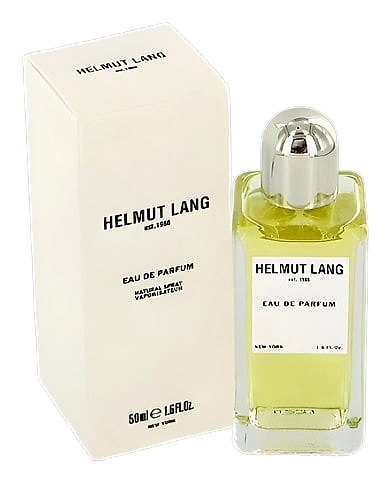
Helmut Lang didn't make fragrances to decorate a vanity. He made them to extend the same logic that defined his fashion: reduction, precision, the elimination of excess. In 2000, the designer's fragrance line crossed into scent with a launch of both Eau de Parfum and Eau de Cologne, both composed by perfumer Maurice Roucel. The Eau de Parfum was the softer half, built around a quietly unexpected combination of cotton candy, lavender, and rosemary. Roucel's approach matched Lang's design philosophy. Nothing announced itself. The scent existed in conversation with the wearer, behaving less like perfume and more like a second skin that happened to smell extraordinary.
Cotton candy in a composition that also carries rosemary, lavender, heliotrope, and patchouli sounds like a contradiction, and it is. The sugar note anchors the sweetness without making the fragrance childish, while the aromatics and florals keep everything grounded. The heliotrope adds a powdery, almond-adjacent warmth that bridges the opening's herbal chill and the base's woody softness. It's a structure designed to shift registers without ever announcing the handoff, the kind of composition that rewards close attention rather than demanding it from across a room.
The evolution
The opening feels almost bracing. Lavender and rosemary arrive first, sharp and herbal, carrying a cool green clarity that recalls cologne rather than the powdery floral that eventually emerges. Then something surprising happens: cotton candy slips in, not as a sugary jolt but as a soft, slightly synthetic sweetness that rounds out the herbs without overwhelming them. It's the kind of opening that makes you tilt your wrist and smell again. Eventually, the florals take over. Heliotrope leads with its almond-powder warmth, followed by jasmine and a restrained rose that never pushes into old-fashioned territory. Lily of the valley adds a dewy green freshness that keeps the heart from going heavy.
Cultural impact
Launched in 2000, this Eau de Parfum quickly developed a reputation among fragrance enthusiasts as a study in restraint. The composition, built on the unlikely trio of cotton candy, lavender, and rosemary, became a touchstone for anyone interested in skin-close scent. Bottles from the original run have circulated through resale channels since the fragrance was apparently discontinued, with remaining stock occasionally appearing at specialty retailers and online resellers. The fragrance's aesthetic, clean, intimate, and built on tension between sweet and herbal, has made it a frequent reference point in discussions of minimalist perfumery.