The Story
Why it exists.
The beginning
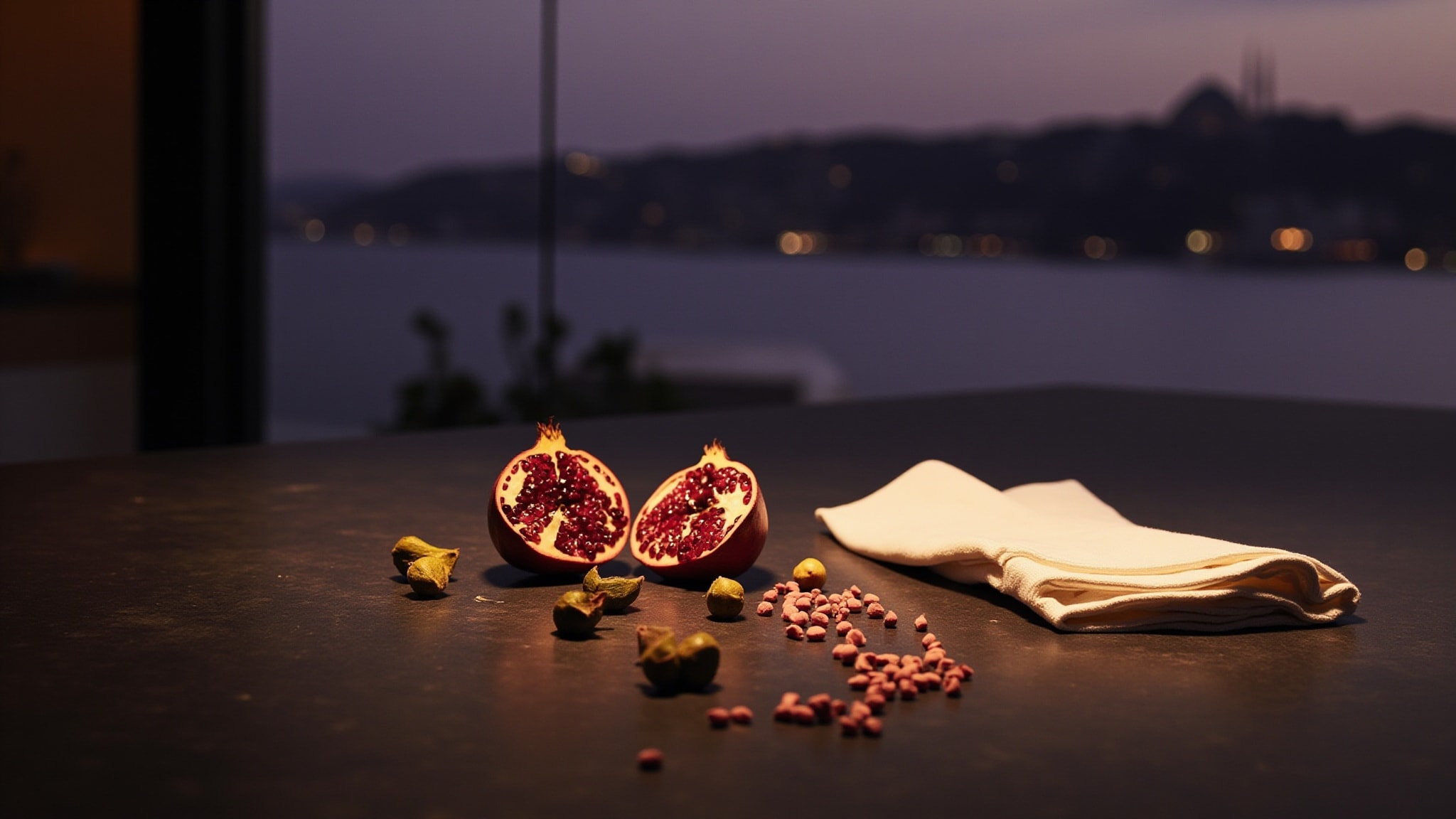
Bosphorus, the strait that splits Istanbul into two continents, has carried spice and fruit across its currents for centuries. Melagrana del Bosforo draws its name from that crossing, pomegranate of the Bosphorus, a single fruit anchoring a composition that swings between continents without ever leaving the wrist. The pomegranate sits at the center, sweet enough to eat raw, layered enough to carry a spiced composition on its shoulders. Pomegranate seeds crack open in the opening alongside pink pepper and cardamom, a trio that feels more like a bustling harbor than a quiet kitchen. The fruit and spice share a sharp, slightly sweet register, both carrying that mouth-tingling quality that wakes up the palate and holds attention through the first stretch of wear.
What makes this structure interesting is the counterweight between fruit and spice. Pomegranate and pink pepper share a common tongue, both sharp, both slightly sweet, both carrying that mouth-tingling quality that confuses the palate. Cardamom deepens the ruse, adding warmth without weight, a spice that knows how to lurk rather than announce. Then the heart shifts entirely into white blossoms, apple and orange, grapefruit flower, which read almost clean against the spiced opening.
The evolution
The opening is louder than expected. Pomegranate arrives bright, almost tart, and pink pepper snaps beside it, the cardamom underneath warming the whole opening into something that reads more like mulled wine than fresh fruit. The fruit-spice accord has a buzzy, energetic quality, the kind of opening that fills a small room quickly and projects with confidence for the first stretch of wear. By the time the blossoms take over, the composition shifts into a different register entirely. Orange blossom and apple blossom lift the composition, adding a creamy, soapy sweetness that softens the spice considerably. This is the phase where it feels like a different fragrance, less spiced market stall, more sunlit courtyard. The incense threads through quietly, barely there, a thin veil of smoke beneath the petals rather than a dominant note. Then the base settles in.
Cultural impact
This is the kind of composition that wears quietly and gets noticed anyway. The pomegranate-spice opening has a nostalgic pull, the kind of scent detail that makes people ask where you've been. It doesn't shout, doesn't perform, doesn't try to dominate a room, and that restraint is precisely what draws attention. The spiced-woody lean gives it range, working across seasons and occasions without feeling locked to one mood or setting. The balance between fruit and wood keeps it from tipping into either pure gourmand sweetness or heavy orientals, landing instead in a middle ground that reads as composed and considered.