
The Story
Why it exists.
The beginning
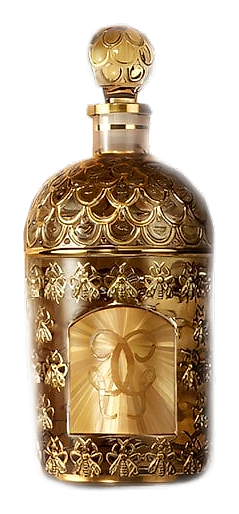
The original Eau de Cologne Impériale arrived in 1853 as a wedding gift, Pierre-François-Pascal Guerlain presented it to Empress Eugénie, wife of Napoleon III. The gesture earned Guerlain the title of Official Perfumer to His Majesty. One hundred sixty years later, in 2013, house perfumer Thierry Wasser revisited the formula for a collector's edition that numbered just 32 pieces worldwide. The brief was simple: preserve the harmony, honour the proportions, do not improve on perfection. Wasser, who travels the world sourcing ingredients for Guerlain's signatures, returned to the same aromatic architecture that made the original unignorable. The bottle, designed by Lison de Caunes, revived the art of marqueterie de paille, straw marquetry, that once decorated Guerlain's most ceremonial flacons. A fragrance reborn as object. A cologne that became a collector's piece precisely because it refused to become anything else.
What makes the composition interesting is not what it contains but how little it needs to say. Three top notes, lemon, bergamot, petitgrain, arrive in perfect formation, each doing exactly what citrus does best: opening a door without walking through it. The neroli heart is the tell. Orange blossom in a cologne is unexpected, lending a floral weight that lifts the composition from bright to something with actual presence. Then rosemary, tonka bean, and cedar in the base, an aromatic-woody anchor that keeps the whole structure from disappearing into the air. The tonka bean is the quiet decision. A touch of sweetness that says: this was composed, not assembled.
The evolution
The opening is immediate and clean. Lemon hits first with the urgency of citrus peel, followed closely by bergamot's rounder, almost bitter sweetness. Petitgrain, the leaf of the bitter orange, adds a green undertone that stops the whole thing from smelling like cleaning product. That's the trick of a great cologne: brightness without sharpness, presence without force. By the time the neroli arrives, roughly twenty minutes in, the citruses have settled into something more like air than scent. The orange blossom reads less like a flower and more like a warmth, the memory of fragrance rather than its announcement. The drydown is where it earns its reputation. Rosemary and cedar hold the structure while the tonka bean introduces a faint, barely-there sweetness. This is the skin-scent phase: close, intimate, the kind of smell that someone notices when they're already leaning in. On fabric, the cedar persists well into the evening.
Cultural impact
The 160th-anniversary edition of Eau de Cologne Impériale appeared in 2013 in an edition of just 32 numbered bottles, each finished with marqueterie de paille straw marquetry by Lison de Caunes. It sits at a curious intersection: a fragrance anyone can understand, in a bottle almost no one will own. Collectors who manage to acquire one describe it less as a fragrance and more as an artifact, proof that Guerlain's original brief from 1853 still holds: compose something so complete, so self-evident, that it needs no translation.