The Story
Why it exists.
The beginning
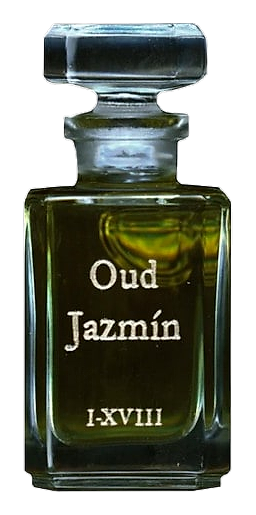
Oud Jazmín arrives from Julian Bedel's workshop in 2019, listed under the Aquilaria grouping within the house's catalogue. The pairing looks inevitable on paper: jasmine and agarwood, two of perfumery's most storied materials, the flower the world has obsessed over for centuries, the resin the trade routes were built to carry. Bedel's challenge was never availability. It was refusal. He didn't want the usual oud-jazmín archetype, the syrupy, almost edible accord that has come to define the genre. He wanted something that read like field notes. The oud in this bottle behaves differently. It sits beneath the jasmine rather than dousing it, and the whole composition takes on a botanical, almost dry-spicy quality that feels closer to a plant pressing than a temple offering.
What makes Oud Jazmín worth attention is what it omits. The accord lists jasmine and agarwood, and beyond those two ingredients the bottle carries little else. No smoothing musk, no sugar to round the edges. The two materials carry the entire weight of the fragrance, which means each one has to earn its space without help. Jasmine tends to read either indolic and heavy or soapy and synthetic; oud tends toward either barnyard or candy. Putting them together without a buffer is a bet that most perfumers decline to make. Bedel made it.
The evolution
The first ten minutes are nearly all jasmine: white, indolic, carrying that familiar bruised-fruit sweetness the flower is known for. Then the agarwood begins to surface, not as a sudden arrival but as a slow oxidation, the way a cut stem darkens in air. It is a clean oud rather than a fecal one, leaning resinous and faintly smoky, with a dry-spicy edge that pulls the jasmine toward something drier and more medicinal. The two materials trade dominance over the next several hours. There is no real drydown in the conventional sense; no vanilla, no amber, no musky close. Instead the oud gradually claims more of the composition, thinning the jasmine from the top down until what remains on skin after five or six hours is a faint wood-resin trace, warm and slightly bitter, closer to dried bark than to perfume. That final stage surprises people who expect the usual creamy send-off.
Cultural impact
Oud Jazmín sits at an unusual corner of the category, more in dialogue with botanical specimens than with luxury styling, and that positioning tends to attract wearers who already trust the house's medicinal-plant philosophy and want a jasmine that challenges them rather than flatters them. The fragrance does not perform for a crowd; it speaks to a particular listener, the sort who is curious about what jasmine sounds like when nothing is moderating it, and what oud sounds like when nothing is sweetening it.