
The Story
Why it exists.
The beginning
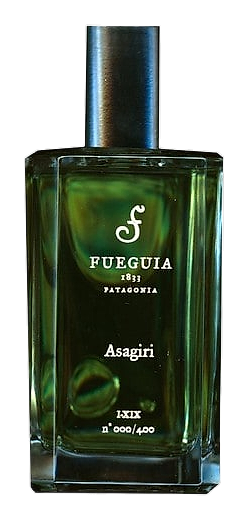
Julian Bedel named this one Asagiri, Japanese for morning mist, drawing inspiration from the winter sunrises over Mount Fuji. A Japanese concept filtered through an Argentine sensibility. The fragrance aims to capture that liminal moment when night releases and cold air carries the faint smell of cedar and pine. The composition is rooted in that early morning stillness, where mist clings to evergreen forests and the first light begins to warm the landscape. It speaks to the austere beauty of high-altitude mornings, the kind where breath becomes visible and the world feels suspended between darkness and day. This is fragrance as landscape study, an Argentine interpretation of a distinctly Japanese atmospheric experience.
The note pyramid has exactly three materials: hinoki wood at the top, thuja in the heart, cedar at the base. Three notes, all from the same botanical family, all coniferous, all sharing that bitter-woody thread that runs through the entire composition. Thuja is not a common perfumery ingredient, it appears here with an almost medicinal intensity that most fragrances avoid. That's the tell. This isn't a safe woody composition. It's built for someone who actually wants to smell a forest, not a candle.
The evolution
The opening hits like cold air through a pine grove. Hinoki wood arrives sharp and austere, slightly bitter, with none of the softness that cedar usually brings to an opening. The composition maintains this crisp, coniferous character throughout its early stages, keeping the wearer in that forest clearing atmosphere. As it develops, the thuja introduces green, almost medicinal facets, with a faint sweetness that adds unexpected complexity. The bitterness doesn't disappear, it learns to coexist with these new dimensions. The cedar eventually emerges, warm and resinous, and the whole composition softens into something intimate but still unmistakably coniferous. The fragrance settles into a quiet woodiness that remains close to the skin, never loud, never trying to announce itself across a room.
Cultural impact
Asagiri occupies an unusual position in the niche fragrance landscape: a Japanese-inspired composition from an Argentine house that typically draws from Patagonian botanicals. The coniferous focus and restrained structure set it apart from expectations, favoring evergreen sharpness over the richer, sweeter woods that dominate many woody fragrances. The medicinal sharpness of thuja is not a flaw but the point, the element that gives the fragrance its character and keeps it from becoming merely pleasant. It is a fragrance that asks something of its wearer, that rewards attention rather than passive appreciation.