
The Story
Why it exists.
The beginning
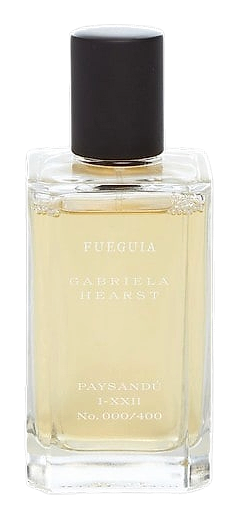
Paysandú is a city in Uruguay, quiet, the kind of place that doesn't announce itself. It's also where fashion designer Gabriela Hearst spent her childhood. When she teamed up with Julian Bedel, the Argentine perfumer behind Fueguia 1833, the brief was personal: translate the landscapes of her youth into scent. Bedel spent time developing the composition, drawing on research by Nobel laureates Leopold Ruzicka and Linda B. Buck, the science of musk as communication, as an amplifier of one's own scent. The result is a fragrance that smells like a specific place and a specific person, distilled into something you can wear.
What makes Paysandú unusual is the pairing of jasmine with Achyrocline satureioides, marcela, a medicinal herb native to South America, and Baccharis trimera, known locally as carqueja. These aren't decorative additions. They reframe jasmine entirely. Instead of the tropical garden variety, the jasmine here feels integrated into a broader botanical landscape. The lemony brightness in the top notes reads as clean and direct, the smell of wild plants with purpose. Copaiba balm and palo santo anchor the drydown in warm, resinous wood.
The evolution
The opening arrives green and immediate, Achyrocline satureioides hitting first, herbal and slightly bitter, before lemon lifts it into brightness. Within minutes the jasmine emerges, not delicate but insistent, backed by the night-blooming warmth of lady of the night flower. This middle phase is where Paysandú reveals its character, the jasmine and herbal notes weaving together into something cohesive and present. The base notes, carqueja, palo santo, copaiba balm, arrive gradually, settling into a dry, woody warmth that lingers close to the skin. The transition from the bright opening through the floral heart to the woody base feels intentional, each phase complementing what came before. What's left in the final hours is a faint green-woody presence, the ghost of jasmine and wild herbs on warm fabric.
Cultural impact
Paysandú sits at an unusual intersection: a fashion designer's memoir expressed through a perfumer's scientific apparatus. The Destinos collection positions these scents as destinations rather than products. It's a fragrance for the wearer who treats fragrance as a form of self-definition, someone who wants to smell like a specific place, not a general mood. The combination of Hearst's design sensibility and Bedel's botanical expertise creates something that feels both personal and grounded in tradition.