The Story
Why it exists.
The beginning
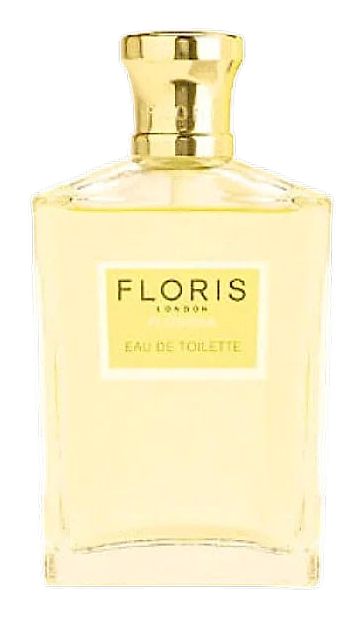
Florissa arrived in 1978 from Floris, a house founded in 1730 and family-run for generations. By the late seventies the perfumery had accumulated well over two centuries of continuous fragrance making in Britain. Florissa entered that lineage as a women's floral that leaned chypre, a composition built around a green opening, a floral heart of iris, jasmine, rose, and lily of the valley, and a base of oakmoss, amber, and spice. The structure borrows from classical chypre traditions, with mossy depth anchoring the florals rather than sweetness carrying them.
What sets Florissa apart is its confidence in restraint. The green opening is brief and purposeful, a brisk introduction before the iris-jasmine-lily of the valley heart takes over with composure. The composition commits to a chypre spine: iris leading the heart, oakmoss and spice anchoring the base, amber warming the finish. That structure is the fragrance. Nothing distracts, nothing shouts. The florals stay cool and polished, the oakmoss provides gravity, and the amber rounds the edges without softening them into something sugary. It reads as a considered object rather than a crowd-pleaser.
The evolution
Florissa opened in 1978 with a green top note that announced itself before settling into the skin. The inaugural green accord gave way to a powdered iris heart cushioned by jasmine, rose, and a thread of lily of the valley. As the hours pass the composition settles into its adult register, with oakmoss leading an amber-and-spice base that wears close and steady. The interplay between the floral heart and the mossy-amber base is what gives Florissa its particular character, a tension between softness and structure that holds from the first hour through the end of the wear. Across the decades since its launch, the formulation in bottles that resurface on vintage shelves appears consistent, which speaks to the continuity of the original composition.
Cultural impact
Florissa belongs to a category of late-seventies British florals built around the chypre template rather than the sweeter, fruitier directions that gained ground elsewhere in that decade. It reads as a floral with mossy underpinnings, where iris and jasmine carry the top of the composition and oakmoss gives it weight. Wearers tend to describe it as the scent of someone who knows what they like, a composition that values coherence over novelty. Production was apparently discontinued, which has made remaining bottles harder to source on the secondary market.