The Story
Why it exists.
The beginning
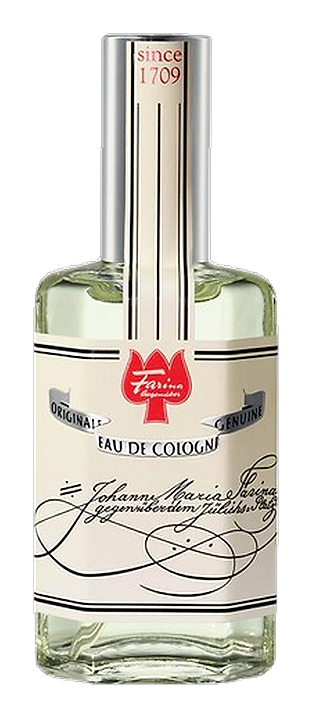
In 1709, Johann Maria Farina, Italian-born, newly settled in Cologne, created something that would give its name to an entire category of fragrance. He named it after his adopted city. The formula featured bergamot, lemon, orange, and a citrus blend that was, at the time, entirely new. The innovation was the combination of citrus oils with pure alcohol, producing a fragrance unlike anything that had come before. The name stuck. Eau de Cologne. A city in a bottle.
What's remarkable is not just that it was new, it's that it was complete. The balance between citrus brightness and herbal depth, the way it stayed clean without becoming sharp, the discretion that made it wearable rather than overwhelming. The notes, bergamot, lemon, citron, lime, orange, grapefruit, form a citrus orchestra that doesn't need a bassline. It stands on its own. The herbal undertones provide quiet grounding that prevents the brightness from becoming fleeting, while the interplay between tart and sweet creates a composed sensation that remains cohesive throughout.
The evolution
The opening hits immediately: bergamot and lemon, sharp and clear, like sunlight through a window that hasn't been opened in years. Within twenty minutes, the citrus softens. The herbal notes arrive, not an herbal punch, just a quiet grounding that keeps the brightness from flying away. The orange and floral notes layer in, and the grapefruit adds a slight tartness that keeps everything honest. By hour two, you're in the heart: still citrus, but rounder now, the green notes holding the structure together. The drydown is where it earns its age. Around hour three, the composition settles into something close and clean, not projecting, not disappearing, just present. The fragrance evolves from sharp opening through a softened middle to a composed finish, each stage revealing different aspects of the citrus and herbal interplay.
Cultural impact
Eau de Cologne became a category because of this fragrance. The name itself, originally a dedication to a city, became generic terminology for citrus colognes worldwide. Farina's original formula set the template: bright citrus, herbal undertones, clean alcohol base. The template it established endures. The house itself remains a quiet landmark in Cologne, producing the same formulation at the original location, a rare continuity in an industry built on reinvention.