




Heritage
A house, in its own words
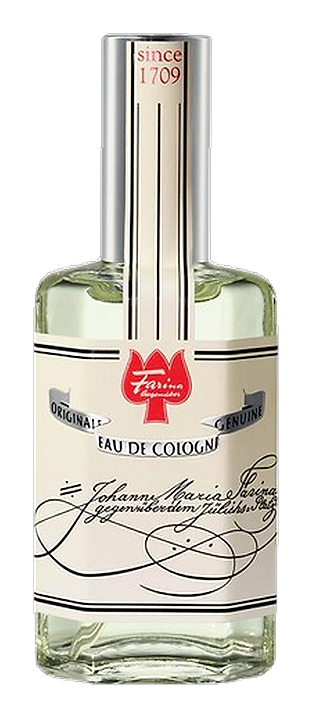
In July 1709, Giovanni Battista Farina (also known as Johann Maria Farina) founded what would become the oldest continuously operating perfume house in the world. Originally from Santa Maria Maggiore in Italy, Farina settled in Cologne and opened a luxury goods retail business before developing his own fragrance formulations. His breakthrough came with a citrus-based fragrance that combined Italian aromatics with German precision, creating a product unlike anything available at the time. Farina named his creation after his adopted city, calling it Eau de Cologne, and the name would eventually become a generic term for all fragrances of this type. The formula reportedly combined bergamot, lemon, orange, neroli, and lavender with herbal undertones, creating a fresh and refined scent that captured European attention. Demand grew rapidly as European aristocrats discovered the fragrance, and Farina's creation became a staple in courts across the continent. The business remained in family hands through political upheavals including the Napoleonic occupation of Cologne, when reportedly a Farina family member received the Légion d'honneur for supplying the imperial household. Over the following centuries, the house maintained production through two world wars and the reconstruction of Cologne, emerging with archives and traditions intact. The family established a museum in the historic building to preserve their legacy and educate visitors about the origins of modern perfumery. Today, the Farina house continues under family stewardship, maintaining formulas and methods that trace directly back to the 1709 founding. Farina operates as a custodian of living perfumery history rather than a commercial brand chasing contemporary trends. The house views each fragrance as a conversation between past and present, where formulas developed centuries ago remain relevant and vital. Rather than frequently releasing new products, Farina develops fragrances with long-term intention, creating scents meant to endure rather than to capture seasonal attention. The family philosophy centers on authenticity and continuity, maintaining that a fragrance house's true value lies in its accumulated knowledge and the ability to pass that knowledge forward through generations. This approach manifests in careful preservation of original formulations and a resistance to reformulating for cost reasons or changing tastes. The house believes in restraint, allowing their products to speak through quality rather than marketing volume. Their philosophy rejects the contemporary pressure of rapid trend cycles in favor of timelessness and classical elegance. Visitors to the Cologne workshop encounter this philosophy directly through displays and demonstrations that contextualize each product within the broader history of fragrance creation.