The Story
Why it exists.
The beginning
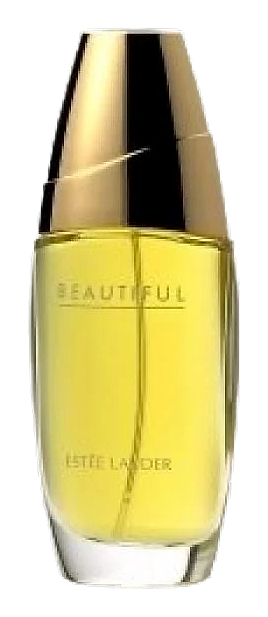
Sophia Grojsman built Beautiful for Estēe Lauder in 1985, and the name wasn't decorative. It was a direct reference to the fragrance itself: a composition dense with real florals, layered and substantial rather than thin or synthetic. Grojsman worked with a palette of tuberose, rose, mandarin, calendula, and lily at the opening, with jasmine, orange blossom, ylang-ylang, and lily of the valley building the heart, and sandalwood, amber, and vetiver anchoring the base. The intent was a floral that carried weight, a scent that announced itself and held its shape through a long evening. It was released as an Eau de Toilette, and its presence on the market shifted expectations for what a bridal-adjacent floral could be in an American launch.
The note pyramid reads like a florist's invoice rather than a perfumer's sketchbook. Tuberose, rose, mandarin, calendula, lily open the door. Jasmine, orange blossom, ylang-ylang, and lily of the valley carry the middle. Sandalwood, amber, and vetiver do the quiet work underneath. What's notable is the calendula, lending a green, almost herbal facet that adds a cooling, slightly bitter edge to the initial spray. On skin, the calendula reads as a faint marigold sharpness, the kind of green that cuts through the cloying sweetness that tuberose can sometimes bring.
The evolution
The first thirty minutes are a spray of citrus and green: mandarin brightness cutting through the heavier tuberose and rose underneath. The florals don't wait politely. They pile in within the first hour, a thick white-flower canopy that can read almost indolic on warm skin. By hour three, the jasmine and orange blossom have settled into something creamier, the initial green sharpness of the calendula having long since faded into the background. The sandalwood enters quietly around hour four, then claims more territory as the florals begin to recede. The drydown is the surprise: amber and vetiver building a low, warm base that clings to fabric and projects softly well into the evening. On a scarf, you'll catch it the next day. On skin, the woody base takes over for the long quiet fade, a skin-scent close that lingers in the warmth of a collar or the fold of a scarf.
Cultural impact
Beautiful became the de facto bridal scent for a generation of American weddings, the one brides defaulted to when they didn't know what they wanted. That ubiquity cut both ways. Some wearers love it for the sheer density of its floral construction, the way it reads as a wedding-bouquet captured in a bottle. Others have grown so accustomed to catching it at ceremonies and receptions that the scent has become almost invisible to them, a background note of American nuptials rather than a fragrance they actively choose.