The Story
Why it exists.
The beginning
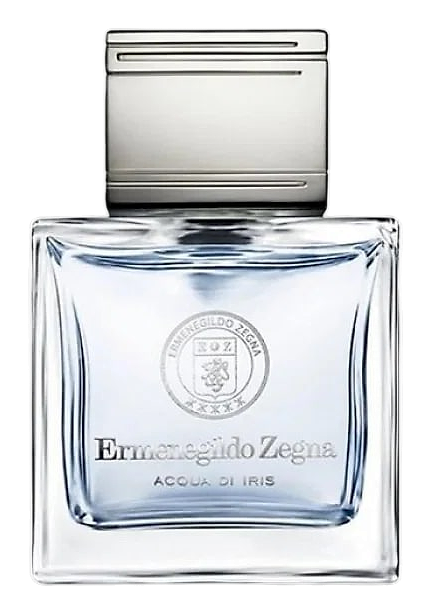
Acqua di Iris finds its place within Ermenegildo Zegna's catalog of scents, a line the house has shaped with care. The fragrance takes one of perfumery's most quietly powerful materials and builds a composition around it. Iris is a peculiar note, one that reads almost like cloth under the fingers: powdery, cool, structured, capable of holding a crease. Zegna treats that quality as the starting point rather than an afterthought. Each supporting ingredient is chosen for what it contributes to the whole rather than for show. The result is an eau de toilette that feels finished rather than decorated. There is a deliberate economy at work here, a sense that every element has earned its place.
What makes Acqua di Iris worth paying attention to is the restraint. Bergamot opens sharp enough to wake the composition up, then steps aside without lingering. Violet leaf adds a green, almost mineral edge that keeps the iris from collapsing into pure face powder. Labdanum grounds the base, its warmth pulling the cool florals back toward skin temperature. The woods settle in quietly, giving the iris something to rest against. Nothing screams. Nothing tries to be the loudest thing in the room.
The evolution
Bergamot opens the composition, bright and almost fizzy, cutting through whatever you applied it over. Violet leaf arrives almost immediately alongside it, adding a cool green sharpness that keeps the citrus from feeling like a generic cologne opening. As the top notes soften, iris takes over. It doesn't burst in. It settles, powdery and composed, the way suede softens with wear. The woods and labdanum surface underneath, and the whole thing shifts from fresh-floral to warm-floral without you noticing the handoff. What lingers in the later stages is a close-skin blend of musk, soft amber-toned woods, and a whisper of the spices that were hiding in the heart all along. The drydown carries a faint sweetness, a quiet warmth that clings to fabric and skin with the same gentle insistence.
Cultural impact
Acqua di Iris arrived as part of Ermenegildo Zegna's catalog, and within the niche fragrance community it earned attention for its quiet restraint. Reviewers consistently noted its professional register, a quality that made it approachable for wearers who wanted refinement without loud projection. The fragrance became a frequent recommendation in discussions of office-ready iris compositions, valued for the way it balanced polish with subtlety. Its bergamot-to-iris-woody progression gave it a recognizable arc, one that felt distinct from typical French iris benchmarks without trying to compete with them on their own terms.