
The Story
Why it exists.
The beginning
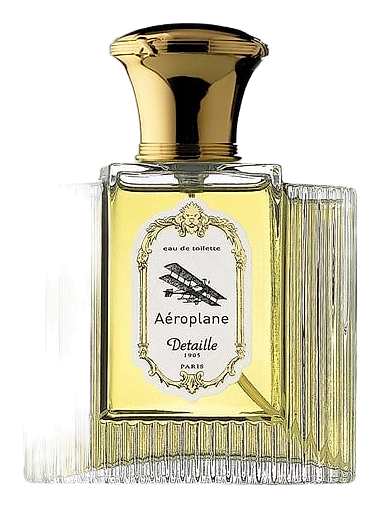
The name says everything. Aeroplane evokes the early twentieth century, the moment France looked up and saw the future arriving overhead. Detaille, already established by 1905, understood that moment intimately. The house built its reputation on precise compositions, each one capturing a specific instant rather than chasing broader moods. Aeroplane arrived as a meditation on momentum: the lift of departure, the clarity that comes from altitude, the green herbs and sharp citrus of air moving fast against skin. It's a fragrance for someone who knows exactly where they're going and doesn't need the trip to take all day.
What makes this work is the refusal to pad. Lemon, bergamot, and petitgrain open clean and direct. The heart, basil and mint, doesn't soften that clarity, it sharpens it. The base is oakmoss and patchouli, two materials that have been systematically stripped from masculine perfumery over the past two decades. Here, they do what they've always done: ground the brightness in something dry, earthy, and lasting. The structure is classically chypre, but the execution is distinctly modern in its restraint.
The evolution
The first minutes are all citrus, Amalfi lemon and bergamot cutting through like sunlight through cloud cover. Petitgrain adds a slightly bitter, floral edge that keeps it from smelling like cleaning product. Within ten minutes, basil and mint arrive. This is where Aeroplane separates itself from the average fresh masculine. The herbs don't soften the citrus, they run parallel to it, adding an aromatic quality that reads as green, almost medicinal, without veering into toothpaste territory. By the second hour, the citrus begins to recede and the oakmoss starts to build. The heart shifts from bright to grounded. Patchouli arrives quietly around hour four, lending a dry, earthy warmth that persists. On skin, expect six to eight hours of moderate presence. On fabric, the patchouli can outlast the wash cycle entirely.
Cultural impact
Aeroplane arrived in an era when aviation still captured the popular imagination, making its name a direct invitation to escape and freedom. The citrus-forward composition mirrored the optimism of early commercial flight, when air travel felt adventurous rather than routine. Detaille's choice to center on bright Mediterranean notes rather than the heavier scents popular at the time positioned Aeroplane as something different, a fragrance for the modern traveler, or at least the modern dreamer. Its longevity in the market, despite minimal marketing, speaks to a loyal following that appreciates its straightforward, unpretentious character.