
The Story
Why it exists.
The beginning
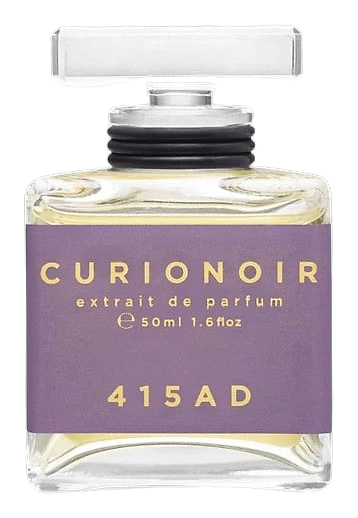
415 AD is named after a year, and the fragrance attempts to rebuild that moment from scent alone: what the air might have carried in an ancient Mediterranean port city, where incense smoke and resinous trade goods filled narrow streets. Curionoir's brand owner and perfume maker is listed as Tiffany Witehira, and the house has built a catalog that reaches into the archive for moments mainstream perfumery ignores. The notes here aren't decorative. They're structural. Somali frankincense, Iranian galbanum, oud, and myrrh all appear in the pyramid, materials rooted in the ancient incense trade that connected the Horn of Africa, the Persian corridors, and the Mediterranean basin.
What separates 415 AD from a standard incense composition is the structural weight given to green, bitter materials. Galbanum is one of perfumery's sharpest tools: a resin that smells like crushed leaves and raw celery stalks, with a metallic edge. Pairing it with tomato leaf, another green material with vegetal acidity, creates a layered tension that pushes the composition into territory most incense profiles avoid. The resins still carry the drydown, but they earn their place by first answering to something greener and more argumentative.
The evolution
The first fifteen minutes are sharp and almost aggressive. Grapefruit gives a quick acidic flash, then galbanum and tomato leaf take over, smelling closer to a herb garden in late afternoon than anything most people associate with oud. There is a green bitterness here that borders on medicinal, the kind of smell that makes you pay attention rather than relax. Around the thirty-minute mark, the resins begin to surface. Myrrh arrives first, warmer and slightly sweeter than the opening allowed. Then olibanum, which brings a lemony, almost pine-like clarity to the drydown. Oud shows up not as the main event but as a shadow underneath, giving the base a faint animalic warmth without dominating. After two hours, the green elements have softened into something more like dried herbs than fresh leaves, and the benzoin adds a low vanillic sweetness that rounds out the sharper edges.
Cultural impact
415 AD sits within a small but deliberate category of perfumery that treats historical period as compositional framework rather than marketing copy. Where most oud compositions lean toward Middle Eastern or South Asian references, this one frames its incense materials through a Mediterranean lens, reconstructing an ancient moment from scent alone. That conceptual frame places it closer to experimental indie work than to commercial Arabian perfumery, and the 2019 release has drawn attention from collectors interested in narrative-driven scent.