The Story
Why it exists.
The beginning
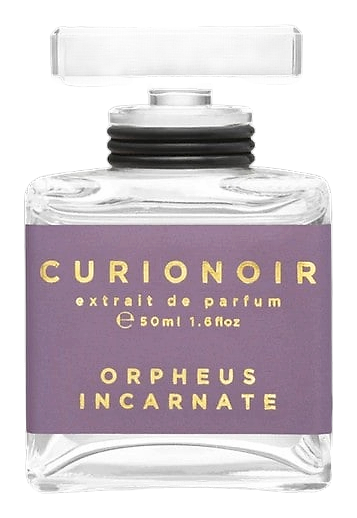
Tiffany Witehira built Orpheus Incarnate around a paradox: the myth of the Thracian bard who charmed everything he encountered, including the dead, with his music. Here, that myth becomes stillness rather than spectacle. Witehira, a New Zealand perfumer, treats Orpheus Incarnate as a deliberate inversion of the mythological template. Where the original Orpheus commanded attention through beauty and song, this composition draws inward, preferring the hushed to the heroic. The scent moves with a hypnotic current, its strength found in what it withholds rather than what it broadcasts. Each accord seems calibrated to lower the listener's guard, to pull attention away from the performative surface of fragrance and toward something more private and weightless.
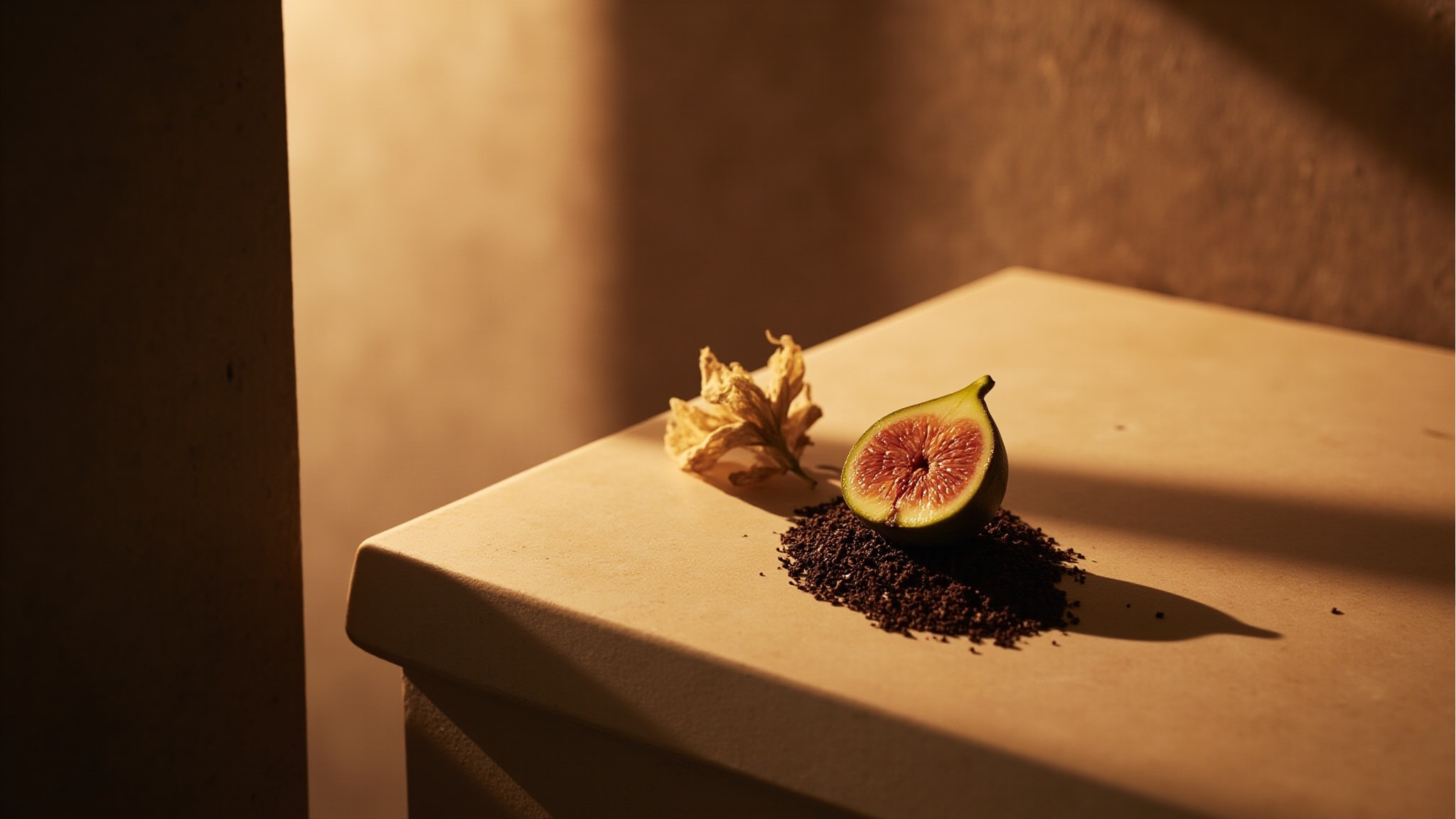
The composition earns its strangeness by refusing to behave like a typical spicy-floral. Carnation sits up front, clove-edged and medicinal, but it's paired with fig, a note that reads cool, vegetal, almost underwater. The tobacco arrives blond and quiet rather than smoked or leathery, which keeps the whole from tipping into bar-room territory. Iris and orris root lend a powdery mineral quality that does the heavy lifting, grounding the sweetness so it never feels like a dessert.
The evolution
The first minutes belong to carnation and fig, a strange and slightly unsettled pairing that reads cooler than you'd expect from anything tobacco-adjacent. Spiced, vegetal, almost saline. Within the first half hour the iris and orris settle in, softening the carnation's clove into something powdery and mineral, while the fig recedes into a quieter sweetness. The tobacco arrives slowly, not as smoke but as warmth, blond and dry, wrapping around the iris like a second skin. As the hours pass, the composition grows increasingly intimate: tonka bean absolute rounds out the edges, musk pulls everything close, and the licorice and heliotrope lend a soft marzipan hush that stays near the skin. The drydown is the longest phase, and the most rewarding. This is a fragrance that holds its shape with patience, each accord revealing itself in sequence rather than all at once.
Cultural impact
Orpheus Incarnate has found its audience among wearers who prefer fragrance as an interior experience rather than an exterior statement. It's a scent for someone who wants something personal, almost private, rather than declarative. Those drawn to it tend to gravitate toward iris-led compositions and tobacco-adjacent warmth without smoke, the kind of quiet complexity that invites leaning in rather than stepping back. The fragrance occupies a particular territory: warm but not heavy, spiced but not aggressive, sweet but grounded by enough mineral and earthy depth to keep it from tipping into obviousness.