The Story
Why it exists.
The beginning
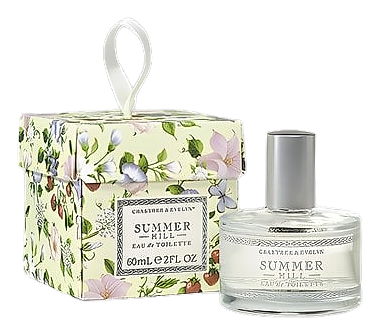
Summer Hill arrived from Crabtree & Evelyn as part of the brand's fragrance work, first appearing in sources dated to either 1988 or 1991 depending on the reference consulted. The name conjures an English countryside in high summer, the sort of quiet hillside where linden trees and wildflowers grow in tangled abundance. Crabtree & Evelyn built the scent to bottle that feeling, not a single flower but the whole atmospheric moment of a garden in bloom. The composition layers notes designed to suggest a place rather than a linear composition, aiming to bottle an entire hillside rather than isolate a single bloom. The linden gives the opening its soft, honeyed green sweetness, a tree-blossom note rather than anything overtly floral, and it sets the tone for what follows.
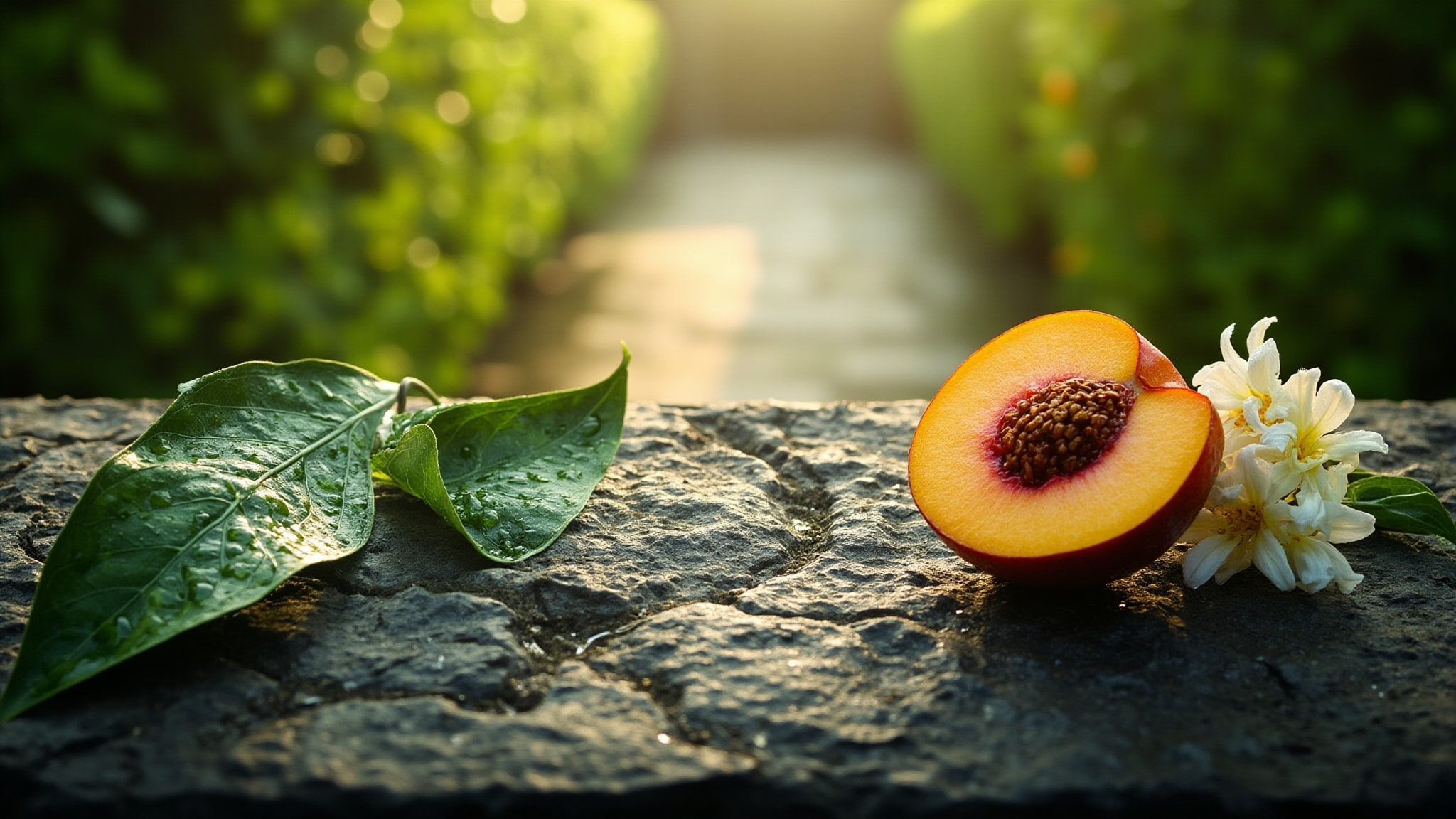
What's interesting here is the restraint. Summer Hill keeps the blossoms thin and translucent, a deliberate choice that sets the tone for everything that follows. Freesia and orange blossom do most of the work, with lily adding that cool, almost watery quality, and green grass notes pulling everything into the open air. The peach isn't sugary, it's the fuzz-skin tang of fruit still on the branch, more suggestion than sweetness. And instead of a heavy musk or amber base, the drydown leans woody, clean and dry, more like bark than balsam.
The evolution
The opening is almost weightless. Freesia and orange blossom arrive together, and the scent reads like petals falling through still air, bright but not sharp, sweet but not candied. There's a green freshness underneath, crushed stems and new grass, that keeps everything from floating away into something too abstract. As the minutes pass the heart settles. Lily takes the lead, and the composition gains a soft, soapy clarity, the kind of clean that reminds you of laundered linen drying in a breeze. The peach appears around here too, not as fruit but as warmth, a golden undertone that gives the white flowers somewhere to lean. The drydown arrives gradually, and it surprises. Summer Hill pulls toward wood rather than the sweeter bases of typical white florals. It's a quiet, dry woodiness, like the inside of a wooden drawer that once held lavender, warm but not sweet.
Cultural impact
Summer Hill occupies a particular corner of fragrance memory, the white-floral-that-wasn't-trying-too-hard. The fragrance gets compared to Diptyque's Ofresia and Guerlain's Apres l'Ondée in similarity listings, both reference points for translucent, green-white florals. Among community members, it reads as a nostalgic piece, something tied to a specific era and style, which makes it polarizing: deeply comforting to some, too quiet and dated to others. One reviewer conjured the image of a Lilly Pulitzer dress and a Vera Bradley wristlet, a snapshot of a particular kind of casual femininity.