
The Story
Why it exists.
The beginning
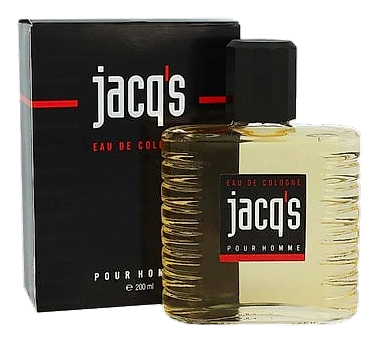
Jacq's arrived in 1979 with a direct proposition: warm spice, aromatic herbs, and a citrus opening that meant business. The composition opens with an immediate assault of clove and star anise, their sharp qualities cutting through the air without apology. Basil adds an herbal counterpoint that feels almost medicinal, grounding the intensity. There's no gradual build here, no waiting for the scent to reveal itself. The citrus element, pomelo, bright and almost metallic, cuts through the spice without softening it. This is a cologne that refuses safe territory. No halfway measures. No whisper. The dry down brings in sandalwood and patchouli, creating warmth that lingers close to the skin rather than projecting outward.
What makes Jacq's interesting isn't any single note, it's the architecture. The top five notes, clove, basil, bergamot, star anise, and pomelo, arrive almost simultaneously, a cluster rather than a sequence. Then the heart notes of blackcurrant and pineapple add a tartness that keeps the spice from overwhelming. The base is where it earns its stripes: sandalwood and patchouli together create something that lingers, that stays with you, that doesn't dissolve after an hour.
The evolution
The opening hits with the force of five notes at once, clove and star anise lead, basil adds the herbal lift, bergamot and pomelo bring the metallic citrus. It's not a gradual arrival. It's an entrance. The heart phase softens the blow as blackcurrant and pineapple introduce a tartness that bridges the gap between opening and drydown. Then, around the two-hour mark, sandalwood and patchouli take over. The spice doesn't disappear, it deepens, becomes something that sits close to the skin rather than projecting outward. By hour six, you're into the tonka bean warmth, a powdery softness that contradicts everything that came before. Last thing at night, it smells like something worn by someone who stopped caring what anyone else thought hours ago. This is not a subtle composition. It's one that works because every layer commits.
Cultural impact
Jacq's occupies an interesting position: discontinued but remembered. Wearers describe it as the kind of fragrance that doesn't exist anymore, bold, unapologetic, built for a man who wanted to be noticed. The 1979 launch date places it squarely in the era of power fragrances, when sillage was a feature, not a complaint. It's consistently described as more intense, more masculine, with a metallic citrus quality that sets it apart. The bold, unapologetic character is what keeps it remembered. It's the kind of fragrance that doesn't exist anymore, something that stands apart from what's available today.