
The Story
Why it exists.
The beginning
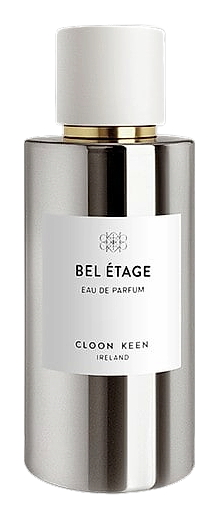
Meabh McCurtin's brief was deceptively simple: take a formula three centuries old and make it speak to the present. The 300-year-old eau de cologne structure had been done and redone, bright citrus, brief heart, clean drydown. Bel Étage needed to honour that lineage without becoming a museum piece. McCurtin turned to the Edwardian building in Dublin that houses Cloon Keen Atelier, specifically to those tall rooms with their generous proportions and their ability to hold morning light without effort. The name came from that: Bel Étage, the most handsome rooms in a Georgian building. The fragrance had to carry the same quality, unhurried elegance, light without showiness, a sense of place that felt both specific and timeless.
What makes Bel Étage interesting as a cologne reinterpretation is what McCurtin added to the structure rather than what she kept. Mate, the South American herbal tea, appears in the heart alongside more traditional lavender and rosemary. It introduces a faint bitterness, a green astringency that keeps the herbal layer from being merely decorative. Combined with jasmine absolute, which adds a floral richness that doesn't overwhelm, the heart becomes a counter-argument to the citrus opening rather than a restatement of it. The base of oakmoss absolute and vetiver anchors the whole thing into something that smells of earth and wood rather than skin.
The evolution
The opening announces itself quickly. Bergamot and orange oil arrive together, bright and clean, with petitgrain adding a slightly bitter, aromatic edge that prevents the citrus from reading as sweet. Neroli softens the whole thing, keeping it lifted. This phase lasts perhaps 30 minutes before the herbs take over. Rosemary and lavender move in, cutting across the citrus with a green, slightly camphoraceous edge. Mate is the quiet presence here, you feel it as a slight bitterness rather than a distinct note. The jasmine doesn't bloom so much as persist, adding a white floral softness that prevents the herbal phase from becoming austere. By hour two, the citrus has fully receded and what remains is the vetiver-oakmoss base: earthy, mossy, with a warmth from the amber that keeps it from smelling green in a way that feels outdoor. Musk stays close to the skin. The drydown holds for another four to six hours, intimate and restrained, with the oakmoss providing a slightly powdery, antique quality, like the smell of a room that has been lived in well.
Cultural impact
Bel Étage arrives at a moment when the fragrance industry is re-examining its relationship with heritage. The classical cologne structure, nearly 300 years old, represents one of perfumery's foundational forms, yet modern interpretations have often stripped it of complexity in favour of accessibility. Cloon Keen Atelier's approach honours the original formula while introducing materials like mate and jasmine absolute that would have been unavailable to 18th-century perfumers. This creates a dialogue between historical authenticity and contemporary craft. The fragrance's connection to Dublin's Georgian architecture adds another cultural layer, grounding the abstract experience of scent in specific built heritage.