The Story
Why it exists.
The beginning
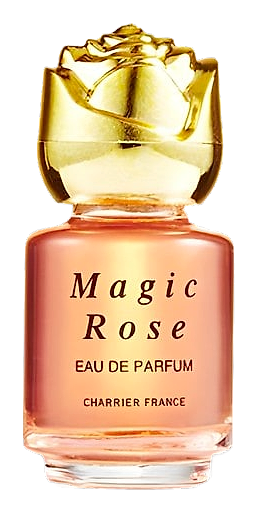
Magic Rose emerged from the Vallauris workshop where the Charrier family continues its fragrance work, close enough to the raw material markets that the house could pull ingredients at peak freshness. The third generation began experimenting with blended compositions in the 1970s. This is a floral study built around the idea that rose doesn't need to dominate to be felt. The rose in Magic Rose is never the loudest note in the room. It shapes the composition from underneath, subtle but present, a quiet hand on the wheel rather than a shout from the bow. The whole fragrance benefits from this restraint: by refusing to announce itself, it invites you in.
The pyramid structure here is notable for what it doesn't do: there's no heavy oriental base pulling the rose earthward, no vanilla softening the petals into something sweet and consumable. Instead, the heart sits on a base of cedarwood, sandalwood, and patchouli, all dry, all slightly austere. The green notes and pink pepper in the top act as a frame, keeping the peony and lily of the valley from becoming syrupy. It's a composition that trusts restraint, which is rarer than it sounds in accessible floral design.
The evolution
The opening is the freesia, sharp, slightly synthetic, unmistakably floral. Within ten minutes, the green notes and pink pepper soften it. The peony moves in and takes over completely. This is a peony-dominant fragrance; if that's not what you came for, the next twenty minutes will feel like a long time. By the second hour, the lily of the valley and rose emerge quietly, beneath the peony rather than beside it. The base arrives around hour three: cedarwood and sandalwood dry the whole thing out, musk keeps it close to skin. On fabric, the cedarwood drydown can last into the next morning, softer, woodier, nothing like the bright peony opening. The drydown reveals a different side of the fragrance entirely, one that rewards patience and close attention.
Cultural impact
Magic Rose occupies a specific space: the rose fragrance that doesn't announce itself. In a market where the rose fragrance has become a statement piece, this one opts for the everyday, something you'd wear to the office, to a Saturday market, to a long lunch. There's an honesty in this approach that people respond to. The fragrance isn't trying to be the most interesting scent in the room, and that restraint is what makes it memorable. It speaks quietly, creating an atmosphere that feels personal rather than performative. This kind of fragrance attracts those who appreciate nuance over noise, who find power in subtlety rather than volume.