The Story
Why it exists.
The beginning
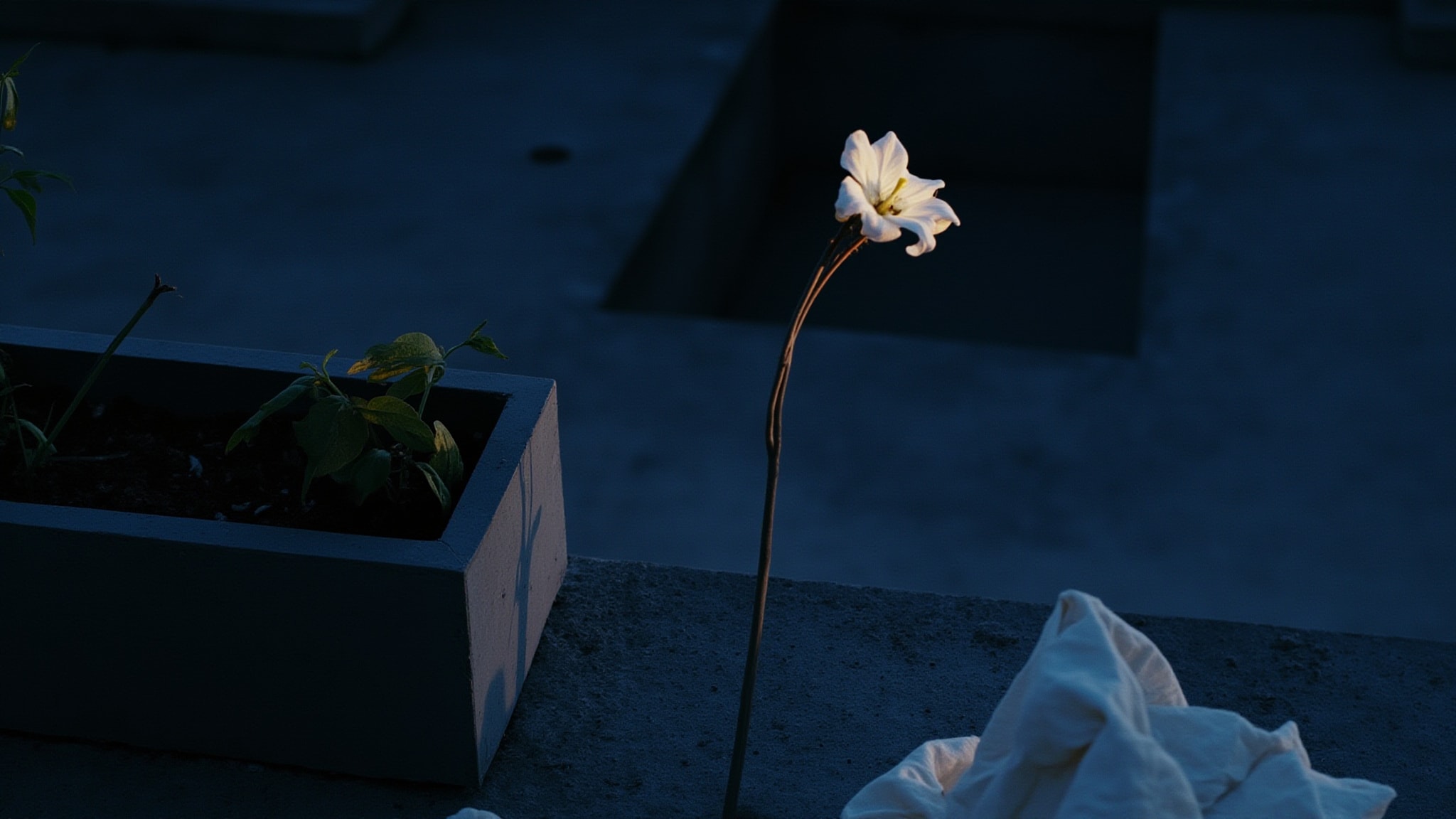
Christopher Brosius spent years obsessing over white flowers, their light, their darkness, the way they open after sunset when no one's watching. Cradle of Light was his attempt to capture that particular magic: not a bouquet on a table, but flowers still rooted, still alive. The name references that liminal state, between darkness and bloom, between cradle and sky. Brosius sourced jasmine absolutes from Egypt, Tunisia, and India specifically for their different characters, then added Indian night-blooming jasmine to anchor the composition in that nocturnal quality. The result is a study in white flowers as living architecture, not decoration.
What makes Cradle of Light unusual is the green. Galbanum, sumac, violet leaf, tomato, these aren't background notes here. They're structural. In most white floral compositions, green notes appear as brief top accords, there to lend freshness before the florals take over. Brosius makes them load-bearing. The galbanum provides an aromatic, slightly bitter edge. Sumac contributes a tangy, almost sour dimension. Violet leaf adds that dewy, crushed-stem quality. And tomato, which sounds bizarre on paper, brings a watery, slightly acidic freshness that keeps the jasmine and tuberose from cloying. The white flowers don't sit on top of the green. They grow through it.
The evolution
The opening hits bright and green, the galbanum arrives first, aromatic and slightly bitter, like sap rather than perfume. Within minutes, white florals pour in: jasmine from multiple origins, night-blooming jasmine, tuberose, narcissus, white lotus. Five voices, distinct but blended. The green doesn't disappear, it deepens, becomes a pulse underneath the blossoms. This opening phase lasts thirty minutes to an hour, bright and almost confrontational. The heart phase shifts subtly. Violet leaf and tomato come forward, adding a vegetal, dewy quality. The jasmine and tuberose deepen, becoming creamier as the sandalwood begins to register. The green softens but never fully retreats, it breathes through the florals like chlorophyll through petals. This middle phase holds for one to three hours. The drydown belongs to sandalwood and CBMUSK. The florals fade to a memory. The green becomes a whisper. What remains is warm skin, close to the body, intimate and lasting, three to five hours of gentle presence.
Cultural impact
Christopher Brosius launched Cradle of Light in 2006 as part of his ongoing anti-perfume manifesto. Rather than creating luxury accessories, Brosius treated scent as autobiography, personal narrative captured in chemistry. This philosophy challenged the perfume industry's emphasis on escapism and aspiration. By presenting white florals in a brutally green, non-gourmand context, Cradle of Light introduced white flowers to audiences who would never wear conventional soliflores. The composition demonstrated that heady florals could exist without sweetness, attracting wearers who appreciated botanical authenticity over comfort. The 2006 launch coincided with niche perfumery's early expansion, positioning Brosius as an architect of the movement toward artistic fragrance.