The Story
Why it exists.
The beginning
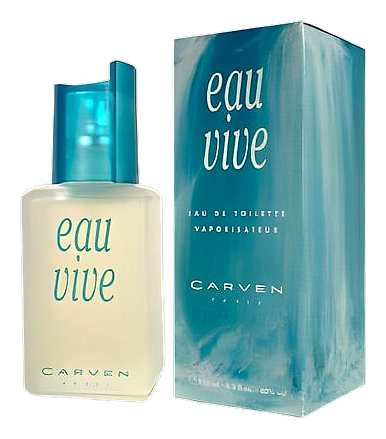
Carven introduced Eau Vive in 1966. Where the house had built its perfumery reputation with compositions rooted in green and chypre, Eau Vive took a different direction, still anchored in citrus and green, but with an openness that felt almost casual. The name itself says everything: vive, meaning alive, vivid, quick with energy. This was a fragrance designed for movement, for women who wanted something that could keep pace with a day rather than linger in the background of an evening. The composition felt like a breath of fresh air against heavier, more structured fragrances of the era, offering something lighter, more immediate, and more in tune with a different kind of modern woman.
What makes Eau Vive interesting is its structure, it refuses to fully commit to any one family. The citrus is there, certainly, but so is lavender, and vetiver, and rhubarb's tart bite. This is a composition that wears its green notes like a second skin rather than an accent. The rhubarb is the surprise: not the jammy rhubarb of pie, but something sharper, almost metallic at the edges, like stems pulled fresh from the garden. It keeps the citrus honest, prevents it from becoming merely pleasant.
The evolution
The opening arrives quickly, with citrus brightness that feels immediate and refreshing. Bergamot and mandarin introduce the fragrance with a clear, lively quality, and green notes soon take over, where the scent earns its name. Juniper berries bring a slight gin-like sharpness, while lavender keeps it grounded in a French tradition of green compositions. As the development continues, lily of the valley appears, delicate, cool, almost waxy. The drydown is where things get interesting: vanilla and musk, but not the heavy variety. This is skin-warm vanilla, the kind that disappears unless someone leans close. Rosewood and vetiver keep the base from going fully soft. The overall impression is of a fragrance that evolves gracefully throughout the day, beginning with bright citrus, settling into green clarity, and ending in something close and personal.
Cultural impact
Eau Vive occupied a specific position in French perfumery history, assured in its simplicity rather than revolutionary. It was re-launched in the mid-90s, and that staying power, rather than initial impact, may be its most interesting cultural footnote.