The Story
Why it exists.
The beginning
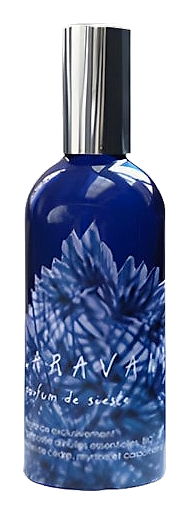
Parfum de Sieste arrived in 2009 from Caravane, composed by Barnabé Fillion. Its aromatic structure gives the release a distinctive character, moving from grapefruit, angelica, lavender, and frankincense toward bergamot, cardamom, mastic, and Spanish labdanum, with cedarwood, myrrh, and frankincense grounding the drydown. The opening feels bright and aromatic, with grapefruit lifting the greener, more herbaceous character of angelica and lavender. As the scent develops, bergamot keeps the composition fresh while cardamom adds a lightly spiced accent. Mastic and Spanish labdanum bring resinous depth, and the later notes of cedarwood, myrrh, and frankincens give the fragrance a dry, woody finish.
The interesting part is the handoff between opposites. Grapefruit brings a clean, sunlit lift, while angelica adds a green, slightly medicinal edge. Lavender keeps the opening aromatic rather than purely citrusy. In the heart, bergamot stays bright beside cardamom’s dry spice, while mastic and Spanish labdanum introduce resinous warmth. The base repeats frankincense and labdanum, adding myrrh and cedarwood for a darker, woodier finish. Nothing here is loud for loud’s sake. It’s a composition built around contrast, with fresh notes handing over to warm resin and restrained woods.
The evolution
At first, the fragrance reads bright and airy: grapefruit cuts through lavender, angelica, and frankincense, giving the opening a clean herbal sparkle. That brightness doesn't vanish so much as broaden. Bergamot lifts the heart, cardamom adds a dry snap, and mastic brings a green resinous texture. Spanish labdanum starts to warm the composition, making the citrus feel less like a splash and more like light caught on skin. In the drydown, frankincense and myrrh deepen the mood, while cedarwood gives the final shape a steady woody edge. The scent settles close and contemplative, with the resins likely lingering longer than the brightest citrus notes.
Cultural impact
Parfum de Sieste sits in the fragrance record as a relatively small, distinctly named unisex release from Caravane, launched in 2009. With limited documented reception and little available press context, its most accessible qualities are found in the scent profile and its clear unisex classification. The composition moves between freshness and resinous warmth, beginning with grapefruit, angelica, lavender, and frankincense before developing toward bergamot, cardamom, mastic, and Spanish labdanum. Cedarwood, myrrh, and frankincense ground the drydown.
The House
CaravaneCaravane is a French fragrance label associated with a single documented release, Parfum de Sieste from 2009. Presented as a unisex perfume, it occupies a notably small corner of the modern fragrance landscape. Available fragrance encyclopedias identify Barnabé Fillion as its perfumer, although the limited record leaves the wider creative team, distribution, and brand development unclear. That restraint gives Caravane a distinct profile: less an expansive perfume house than a concise catalogue centered on one named composition.
The Creator
Barnabé FillionFillion favors natural extracts that retain their original character, often pairing a single flower with an unexpected mineral or resin. He builds his compositions layer by layer, allowing each note to settle before adding the next, a method he likens to developing a photograp…