The Story
Why it exists.
The beginning
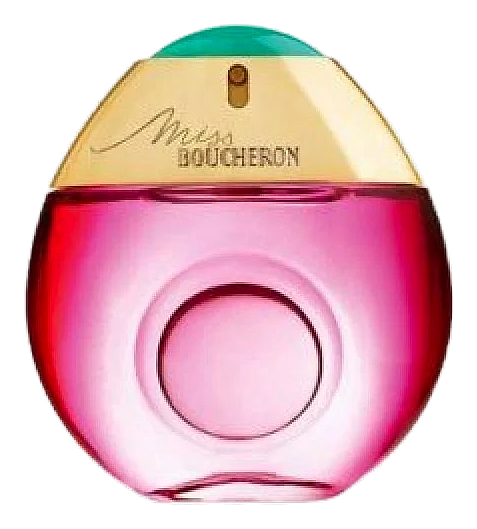
In 2007, Boucheron released Miss Boucheron as their first fragrance explicitly aimed at women between 25 and 35, a younger chapter for a house built on royal commissions and Place Vendôme grandeur. The campaign drew from Alice in Wonderland, a story about falling through the surface of things into something stranger and more alive. The name carries the house's heritage while the concept suggests a woman who inherited the jewelry but not the reverence.
Anne Flipo and Dominique Ropion built the bouquet around contrast: tart pomegranate and pink pepper open with bright immediacy, then give way to a heart of Bulgarian rose, cyclamen, and violet that could tip into saccharine without the base notes holding. The blond suede, a note Boucheron called out specifically in their campaign materials, provides the counterweight. It reads less like leather and more like the soft inner surface of a well-worn glove.
The evolution
The opening hits immediately: pomegranate's sharp fruit followed by pink pepper's delicate spice, bergamot cutting through like a shard of light. Within twenty minutes, the tartness recedes and the violet-rose heart takes over, powdery, almost cool, a different register entirely from the fruity punch. The suede arrives quietly around the hour mark, blending with musk and cedar to create something skin-close and warm. By hour three, you're left with a soft iris-suede trail that whispers rather than announces. The longevity lands somewhere between a workday and a full evening, depending on skin.
Cultural impact
Miss Boucheron occupied a specific position in the late-2000s floral-fruity category: positioned below the main Boucheron line in pricing but above the average mass-market release. The Alice in Wonderland campaign aligned it with a certain literary-luxe femininity that was common in the era but has aged into something specific to that moment. Community reception is notably divided, wearers either find it charming and well-composed or detect a synthetic, almost plasticky quality in the fruit notes. The bottle design draws consistent criticism for appearing juvenile, though that was likely intentional given the target demographic of women 25-35.