
The Story
Why it exists.
The beginning
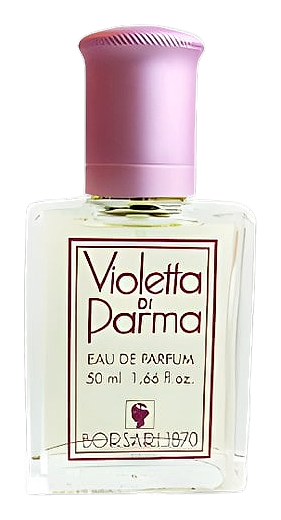
Principe arrived in 1970 from Borsari 1870, a Parma house whose name carries more than a century of regional Italian perfumery behind it. The name reads princely, almost regal, though the fragrance itself makes no such claim. It is a women's floral, released when Italian perfumery was still leaning into uncomplicated femininity, and Principe fits that moment cleanly. No spectacle. No statement. Just a composition shaped by the Emilian sensibility that runs through the house's catalog, written with a quiet hand that prefers understatement. Released in 1970, the production has since been discontinued, which only sharpens its quiet character. Principe doesn't chase attention. It simply arrives, soft and sure of itself, the way the Parma houses of that era tended to work.
What makes Principe interesting is what it refuses to name. The reference data lists a general floral accord rather than a spread of identified notes, which is rarer than you might expect in a fragrance market that now builds every release around a cast of named characters. There is no pyramid of identifiable flowers competing for the foreground, no breakout ingredient the bottle is meant to explain. This is a composition built around mood rather than ingredients, the kind of structure where the whole matters more than the parts.
The evolution
Principe opens in a wash of soft floral brightness, nothing sharp, nothing demanding. It reads as the moment you step out of a cool house into a warm morning, the air already holding the day's first sweetness. The opening phase is the lightest the fragrance will ever be, a delicate veil of petals that sits close to the skin rather than projecting outward. Then the florals deepen, turning from brightness into something warmer and more private. The petals settle into a presence that reads less like a perfume and more like a memory of one, an impression that clings to the wearer's warmth rather than announcing itself to the space around her. There is no dramatic shift, no sudden reveal of base notes, just a gradual sinking into the warmth of the wearer, a soft handoff between one phase and the next that feels more like drift than transition.
Cultural impact
Principe arrived in 1970 as a women's floral from Borsari 1870, a Parma-based house with deep regional roots. The composition presents itself as a unified floral impression rather than a layered pyramid of named botanicals, a single gesture rather than a constructed architecture of separate materials. That unified impression reads as a kind of confidence in the wearer, a refusal to spell itself out.