
The Story
Why it exists.
The beginning
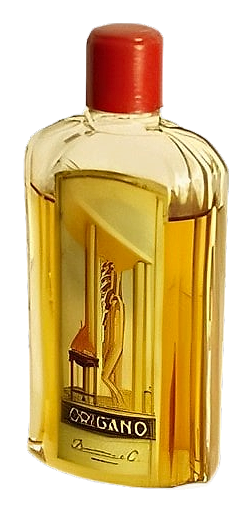
Colonia Origano arrived in 1933, a year that marked a specific kind of Italian cologne: bright, bitter, built for the morning ritual. Borsari leaned into oregano as the star, not a supporting accent, treating the herb as a centerpiece rather than a garnish. Oregano carried with it a vocabulary of green, peppery, slightly resinous aromatics, the kind that defined the house's earlier work in Parma. What set Colonia Origano apart was the commitment to a single herbaceous thread, letting one plant carry the full composition rather than scattering the focus across several.
What makes Colonia Origano unusual is the sheer economy of its structure. Most aromatic compositions of the era spread their attention across multiple herbal layers, but Borsari narrowed the field to oregano and a citrus lift, letting the herb's peppery, slightly bitter character carry the full aromatic weight on its own. Marjoram runs close enough to oregano to deepen the green without adding sweetness, functioning as a shadow note rather than a featured player.
The evolution
The first spray hits bright and sharp. The citrus oils flash up immediately, a clean, stinging acidity that registers across the back of your nose before anything else has a chance to settle. Within minutes, oregano pushes forward. Not the dusty dried-herb jar smell from your kitchen shelf, but something closer to the live plant: green, resinous, almost minty in its coolness, the kind of aromatic intensity you only get from herbs that haven't been broken down by drying. Marjoram threads underneath, softer, warmer, carrying just enough of its own sweetness to keep the oregano from feeling austere. The citrus doesn't vanish entirely. It just stops leading, retreating into the upper register where it lends brightness without demanding attention. After thirty minutes the whole thing settles close to the skin.
Cultural impact
Colonia Origano occupies a specific place in Italian fragrance, one defined by its willingness to center a single unconventional herb rather than follow the more familiar citrus-and-lavender path. Wearers tend to be people who want something off the expected trajectory, who find comfort in the green bitterness of oregano as a statement rather than a backdrop. The fragrance rewards a certain kind of nose, someone drawn to the sharper edges of aromatic compositions, someone who recognizes what good oregano smells like when it's allowed to lead. It doesn't ask for validation from broader trends. Its appeal lies precisely in that independence.