
The Story
Why it exists.
The beginning
1933. A women's fragrance that arrived at the tail end of an era when Italian colognes were still colognes in the truest sense, stripped back to the bare essentials of what a fragrance could be. Capricci d'Amore, the name translating loosely as 'whims of love,' and the composition matches that lightness on every level. The architecture is almost naked: citrus and flowers, nothing else competing for attention. No exotic resins, no heavy orientals pulling the scent toward darker territory. What you get is the genre itself, a classical Italian floral-citrus cologne for women, built with the kind of confidence that only comes when a perfumer trusts simplicity completely.
The composition is almost defiantly simple on paper, and that's exactly where its charm lives. Heart notes listed only as Floral Notes and Citruses, no top-and-base pyramid broken into three layers. That's not laziness, it's the genre. Classical Italian floral-citrus colognes of this period didn't need a structured drydown to feel complete. The freshness was the entire point. Capricci d'Amore belongs to that older school where citrus isn't a fleeting top note but a sustained character that defines the scent across every phase of its wear.
The evolution
It opens the way a bright Italian morning opens, with citrus that hits immediately and doesn't apologize for itself. The freshness arrives at full volume, no warm-up period, no gradual reveal. Within the first few minutes the florals rise to meet it, not so much specific blossoms as the generalized impression of a bouquet left on a windowsill catching the light. There's no chameleon moment here, no top notes that vanish and reveal a completely different fragrance underneath. Instead the whole composition breathes together as one continuous impression, the citrus and florals woven so tightly that you can't quite tell where one ends and the other begins. As the hours pass the sharpness softens, the florals warm gently against your skin chemistry, and the whole thing settles into something quieter and more personal.
Cultural impact
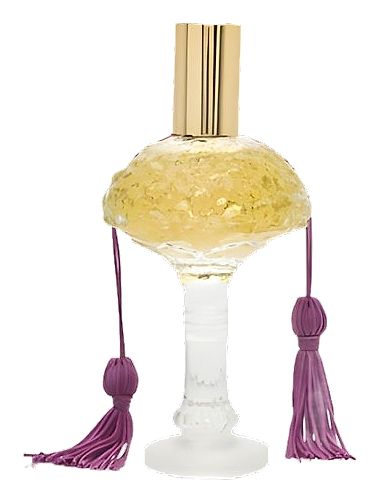
Capricci d'Amore sits in a quieter corner of perfume history, a 1933 women's cologne that belongs to a tradition now largely forgotten by mainstream fragrance culture. Its architecture was stripped down to the essentials: citrus and florals, presented without ornamentation or embellishment. The discontinuation of production means the bottles that remain carry the particular weight of objects that aren't being made anymore, each one a small piece of fragrance history preserved in glass.