
The Story
Why it exists.
The beginning
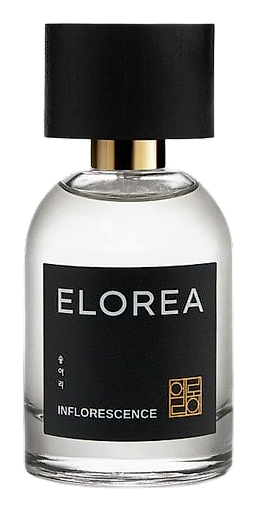
Linda Song designed Inflorescence around a Korean word that doesn't have a clean English equivalent. Songari means an array of flowers or fruit growing on a single stem, abundance, but organized. The Forgotten Words collection pulls from vocabulary that's fading from modern use, and this one landed on something that sounds like a mood: clustered florals with a tart edge, held together by softness. The brief was simple: make something that flutters.
What makes the structure interesting is the mulberry. It sits in the top, where you'd expect sweetness, but instead it brings a tartness that keeps the florals from going soft entirely. Honeysuckle and plum blossom in the heart are a quiet pair, not the loudest florals, but the ones that linger. Lily of the Valley adds a green undertone that prevents the whole thing from going syrupy. White amber and sandalwood in the base don't dominate. They hold. The result is a white floral that remembers it has edges.
The evolution
The opening is two notes arriving together: Chinese magnolia's creamy petals and mulberry's sharp berry. There's a brief moment where the tartness leads before the florals catch up. Within twenty minutes the honeysuckle arrives, sweet but not loud, and the plum blossom follows. The mulberry never fully disappears. It stays underneath, keeping the florals honest. The drydown is where it settles. Musk and white amber create a skin-close warmth, and the sandalwood adds a creamy wood that rounds everything. The composition develops into something that lingers without announcing itself, revealing new facets as the hours pass.
Cultural impact
Inflorescence arrives at a moment when Korean cultural influence extends beyond food and entertainment into luxury goods and design. ELOREA's Forgotten Words collection uses fragrance to document linguistic heritage, choosing songari, the botanical term for an array of blossoms on one stem, as both name and concept. This approach treats perfume as a vehicle for cultural preservation, embedding vocabulary into sensory experience rather than leaving it to fade from dictionaries. The collection's 2023 launch coincided with a broader global interest in Korean aesthetics.