
The Story
Why it exists.
The beginning
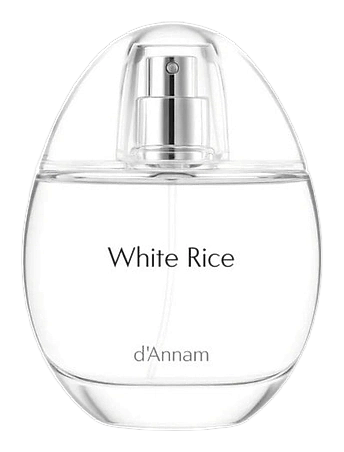
The idea was deceptively simple: bottle the smell of a bowl of white rice. Not in the literal, gourmand sense, the perfumer Anh Ngo was not after rice pudding. She was after something more fundamental. Rice is the foundation of Vietnamese cuisine, the daily anchor that grounds every meal. And in the context of d'Annam, a house treating scent as autobiography, Anh wanted to capture what that foundation actually smells like when you get close to it, not the rice itself but the steam, the starch, the hot ceramic bowl. The Pandanus addition nods to a specific edible leaf found throughout Southeast Asian cooking, tying the fragrance to a regional truth rather than a broad concept of rice. This is not rice as a trend. This is rice as cultural memory, translated without sentimentality.
Anh Ngo's note philosophy here centers on restraint. Rice as an aroma concept is inherently subtle, easily lost in a composition that tries too hard to make a statement. By pairing it with Pandanus leaf, she introduces a regional green note that grounds the rice in something specific rather than generic. The heart relies on Orris Root and Jasmine not to create floral impact but to provide the powdery warmth that prevents the opening from feeling too austere. The drydown's White Musk and Cedarwood ensure the fragrance stays close to the body, never projecting aggressively. This is a composition built on the principle that what you do not say matters as much as what you do.
The evolution
The opening hits with the scent of steam, not sweetness. Rice and Pandanus arrive together, the rice offering its starchy, almost metallic quality while the Pandanus leaf brings a green, slightly bitter counterpoint that prevents anything from reading as food. Within fifteen minutes, the rice steaminess quiets and Orris Root steps forward, its powdery violet character adding a quiet elegance that elevates the composition beyond ambient smell. Jasmine follows, not as a star but as support, softening the iris with creamy white florals that feel like warm laundry rather than perfume. By the third hour, Cedarwood has established its dry, woody presence, and White Musk begins its work of making the entire fragrance feel native to the skin. Tonka Bean arrives last, its coumarin trace barely registering as anything more than a softening agent between the cedar and the skin.
Cultural impact
White Rice occupies a rare position in contemporary perfumery: a fragrance with a clear cultural reference that isn't loud about it. The rice note is unusual in Western fragrance, it appears rarely, and when it does, it often gets flattened into generic white musks. Here, it anchors the entire composition. d'Annam's approach of treating scent as memory rather than trend has resonated with a specific audience: people who want fragrance to mean something beyond projection and performance. White Rice doesn't fill a room. It fills a moment.