
The Story
Why it exists.
The beginning
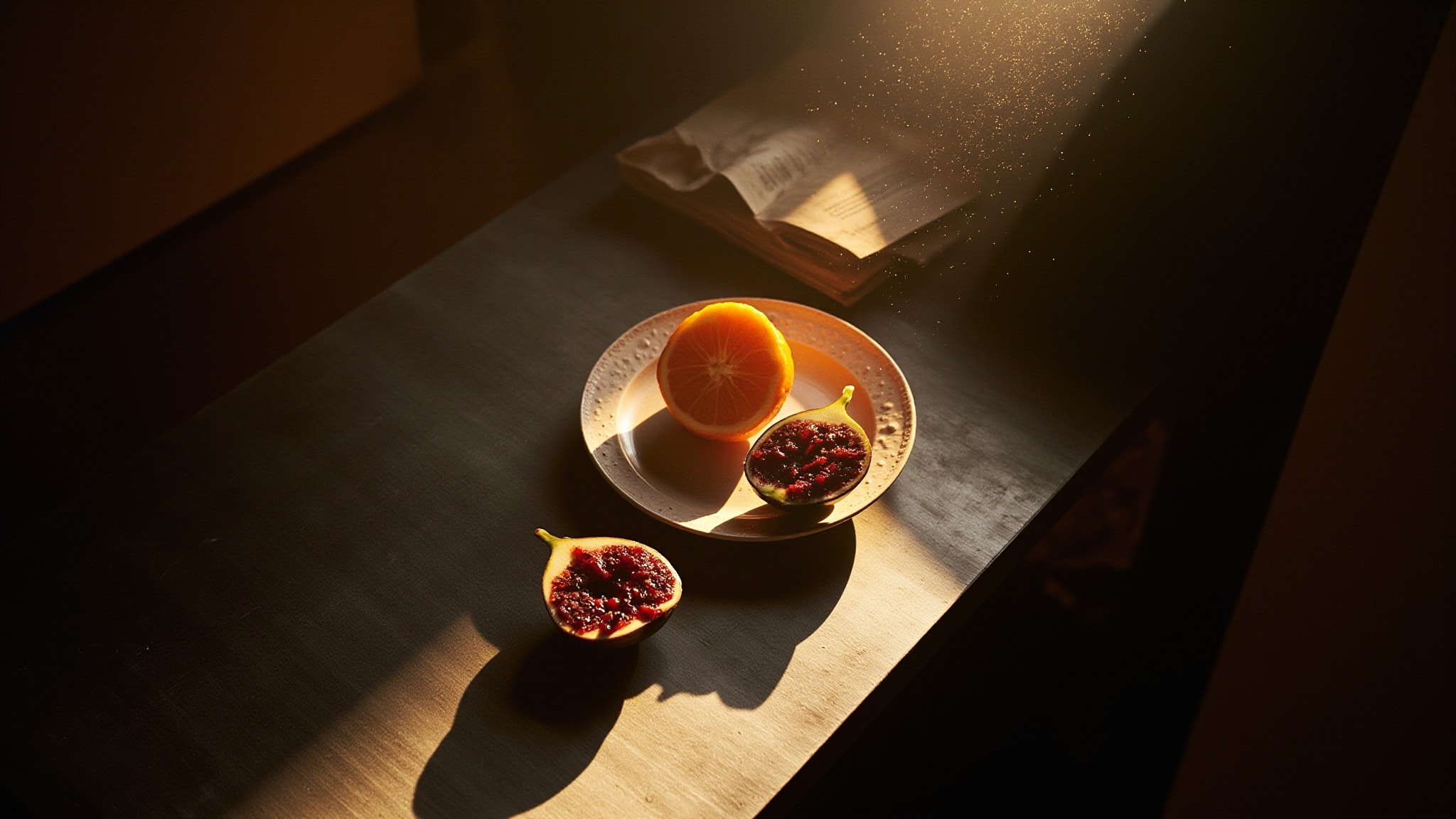
Carnal arrived in 2004 as part of Black Phoenix Alchemy Lab's Ars Amatoria collection, a themed line in the brand's catalog whose name borrows from Ovid's ancient treatise on the art of love. The fragrance is a study in deliberate minimalism, composed of just two materials: mandarin and fig. That near-empty ingredient list reads less like a shortcut and more like a provocation. Most perfumes lean on pyramid structures, building from bright top notes through heavy bases, layering accord upon accord to create complexity. Carnal refuses that scaffolding. It offers two voices and expects them to carry the entire piece. The tension between the mandarin's bright, sun-warmed sweetness and the fig's dense, almost jammy ripeness becomes the composition itself.
The structural gamble of Carnal rests on the fact that neither ingredient behaves the way perfumery convention would predict. Mandarin, the bright citrus that usually announces itself and then vanishes within the first half hour, here refuses to evaporate on schedule. It deepens, sweetens, and settles into the composition rather than disappearing from it. Fig, which in many compositions is used as a supporting player or a green-woody accent, takes center stage and stays there, holding its jammy, almost edible character without losing dimension.
The evolution
Carnal opens with mandarin at the forefront, a sweet, sun-warm brightness that carries a waxy depth beneath its obvious sweetness. The citrus is present, but it does not snap or sparkle the way a freshly peeled mandarin would. It has weight. The fig rises quickly to meet it, arriving with the dense, ripe intensity of fruit that has passed its peak and begun to turn toward preserves. As the two notes settle together, the mandarin loses some of its citric edge and takes on a candied quality, while the fig becomes fuller and more jam-like, its sweetness deepening into something almost syrupy. The middle phase reads as a single fused impression of warm, ripe fruit on skin, with neither note retreating. There is no woody drydown, no amber base, no musk to ground the composition as it wears. The fruit simply persists, softening gradually, pulling closer to the body.
Cultural impact
Carnal holds a specific place within the Ars Amatoria collection, the line that takes its name from Ovid's classical work on seduction and desire. Among BPAL's extensive catalog, the fragrance stands out for its radical minimalism, a two-note composition that asks the wearer to consider what fruit can do when stripped of every usual support. The fig note here carries none of the green leaf or woody bitterness common to fig-based fragrances, presenting instead as pure ripe fruit, dense and jammy. The mandarin refuses to behave like a fleeting top note and instead settles into the composition as a lasting presence.
The House
Black Phoenix Alchemy LabBlack Phoenix Alchemy Lab (BPAL) emerged in 2002 as an independent house that blends mythic narrative with olfactory craft. Based in Philadelphia, the brand offers a catalog of perfume oils that range from the darkly poetic "Perversion" to the whimsical "Snow, Glass, Apple." Each scent arrives in a small, refillable vial, inviting collectors to explore a library of more than two thousand fragrances. BPAL’s reputation rests on its willingness to experiment with unconventional themes, from gothic literature to occult symbolism, while keeping production small enough to maintain a personal touch for each batch.
The Creator
Elizabeth Moriarty BarrialBarrial favors perfume oils applied directly to the skin—a format that allows for concentrated, intimate scent experiences. Her creations often feature rich, resinous bases layered with herbs, resins, and botanicals drawn from herbalism and aromatherapy traditions.