The Story
Why it exists.
The beginning
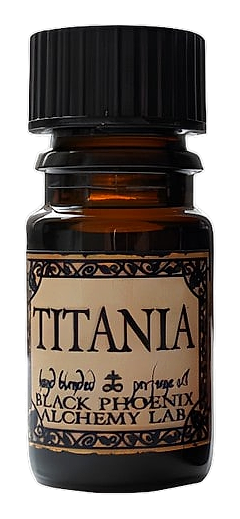
Titania takes her name from Shakespeare's Queen of the Fairies, but this isn't the jealous, furious Titania of the play's later acts. This is something gentler. The fae queen before the quarrel with Oberon, drowsed in moonlight, surrounded by the cool abundance of her nocturnal court. BPAL's Illyria collection draws directly from Shakespearean geography and character, Illyria being the coastal realm of Viola's adventure in Twelfth Night, and each scent in the series translates a different figure into olfactory language. For this particular translation, Elizabeth Moriarty Barrial reached for pale fruits and night-blooming florals, building a composition that feels less like perfume and more like atmosphere. The official description calls it a "nocturnal bounty of fae dew-kissed petals and pale fruits." That word "bounty" is right. It's generous without being overwhelming.
What makes this composition work is the way its elements reinforce each other without collapsing into sameness. White florals, particularly moonflower, don't just add sweetness. They add luminosity. The scent seems to glow faintly, as if the flowers themselves were catching and holding ambient light. Musk rose anchors the florals without heaviness, keeping the entire structure cool rather than warm. Datura is the secret. Not listed in the official tagline but present in the formulation, datura adds a faintly narcotic, green undertone that stops the sweetness from becoming decorative. It gives Titania something to think about beneath its gentle surface.
The evolution
The opening arrives bright and cool, white grape and iced pear hitting skin with an almost startling clarity. It smells like fruit that hasn't warmed in the sun yet, cold, crisp, with a hint of the green stems still attached. This phase lasts thirty minutes to an hour, depending on skin chemistry. Then the florals begin to assert themselves. Sweet pea opens first, softening the edges of the fruit, adding that pastoral innocence that prevents the composition from becoming too knowing. Snapdragon arrives quietly, its green snap appearing as if to remind you that this is still a garden, still growing, not a abstract idea of sweetness. The heart holds for two to four hours, a gradual blend of cooling florals and fading fruit, with musk rose providing warmth that stays close to the skin rather than projecting outward. By drydown, only a trace remains, white peach and datura lingering together, a cool, slightly green residue that smells like morning dew on petals that bloomed all night.
Cultural impact
Titania occupies a particular niche within BPAL's vast catalog, one of the more accessible entries in the Shakespearean Illyria collection, appealing to wearers who want the house's narrative sensibility without its more challenging experiments. Unlike BPAL fragrances built around animalic notes or gothic extremes, Titania reads as genuinely wearable: sweet, floral, and cool without being aggressive. It has found a consistent audience among those who want a floral-fruity fragrance that refuses to be ordinary, that carries the brand's mythic framing without demanding the commitment of something darker or stranger. The 2004 launch predates the current indie fragrance boom, making it something of a quiet classic for collectors who discovered BPAL in its earlier years.