The Story
Why it exists.
The beginning
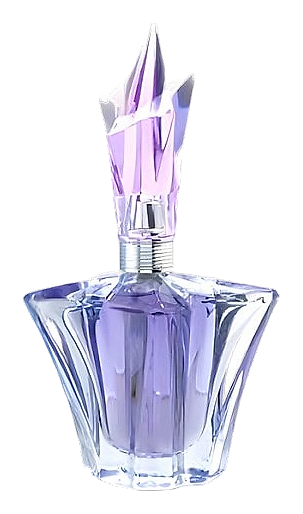
Françoise Caron composed Violette Angel in 2005 as a flanker to the iconic Angel, Mugler's 1992 blockbuster that redefined perfumery with its patchouli and ethyl maltol overdose. The brief was simple: take Angel's signature patchouli-vanilla ground and offer it through a cooler, more floral lens. Violet became the answer, thin, sweet, and elegant, brought into the Angel family with sugar and ozonic lift. A garden added to the galaxy.
What makes the violet here interesting is that it doesn't behave like a traditional violet. Sugar amplifies its sweetness into something almost medicinal, while hyacinth and the ozonic accord add a cool-water quality that keeps it from being merely pretty. The woody notes in the heart don't soften the violet, they ground it, giving it weight and structure. It's the kind of violet that could only exist in a Mugler flanker: familiar enough to belong, different enough to stand alone.
The evolution
The opening hits sugar-bright and ozonic. Violet leaf cools things down, green, almost watery. A playful tension between gourmand sweetness and something cooler, almost cool-water fresh. Thirty minutes in, the heart blooms powdery and elegant. Violet takes center stage, woody notes keep it grounded, not delicate. The sweetness stays present but balances against the cool green from the opening. Hours later, patchouli and vanilla form a warm, earthy base. Oakmoss threads through, the violet garden's green understory. The violet fades but the warm grounding lingers close to the skin. Still present the next morning, quieter but unmistakable.
Cultural impact
Violette Angel is a flanker that brings Angel's signature patchouli-vanilla base into a cooler, more floral register. The ozonic violet opening is distinctive and polarizing, some find it medicinal, others find it compelling. It's a bridge between Angel's boldness and something more approachable.