
The Story
Why it exists.
The beginning
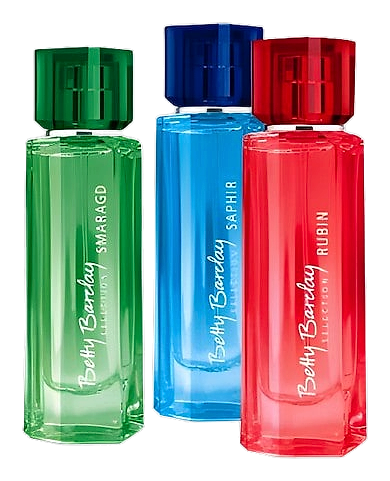
Rubin arrived in 2006 as part of Betty Barclay's lineup, a naming convention that places it under the umbrella title 'Betty Barclay Selection,' with 'Rubin' denoting its individual release within that grouping. Fragrantica catalogs the broader family under a collection name called 'Gemstones,' though the editorial framing of each release as a cut stone catching light at different angles is not how the brand describes it, so we'll set that aside. What is confirmed is that Betty Barclay is the house behind the name, with the German origin implied through the Mäurer & Wirtz connection, since sources note the fragrance was last marketed by Mäurer & Wirtz.
What makes Rubin interesting is the structural choice visible in its note list: instead of a standard neroli cologne that would close out on amber or a woody accord, the listed base notes go to sandalwood and musk. That ordering is what makes the composition read softer than its citrus opening suggests. The citrus is the opening line, not the whole story, and the white floral heart, built around night-blooming cereus and white peony, sits in the middle to bridge the bright top and the grounded base.
The evolution
The first 15 minutes are where Rubin announces itself: neroli, mandarin, bergamot, bitter orange, all present at once. It's bright but not aggressive, more like sunlight through a window than a slap of zest. Around the 30-minute mark, the citrus begins to recede and night-blooming cereus slides forward, bringing a greenish, almost aquatic floral character that you didn't expect from something this citrusy on paper. White peony softens the edges of that floral moment, making it feel less like a flower and more like clean laundry left out to dry. Once the base notes settle in, sandalwood and musk take over, creating that skin-but-better effect that wearers describe: warm, slightly creamy, faintly powdery. The sandalwood lends a smooth, rounded quality to the drydown, and the musk underneath keeps the whole composition close rather than letting it broadcast.
Cultural impact
Rubin is cataloged under Betty Barclay's 'Selection' naming convention, which places it within a broader lineup of individual releases rather than as a standalone flagship. It reads as a citrus-floral with a musky base, the kind of composition that aims for everyday wear rather than statement-making projection. The note structure, neroli, mandarin, bergamot, bitter orange up top, night-blooming cereus and white peony in the middle, sandalwood and musk underneath, positions it as an accessible women's release built around a citrus opening and a skin-close drydown.