The Story
Why it exists.
The beginning
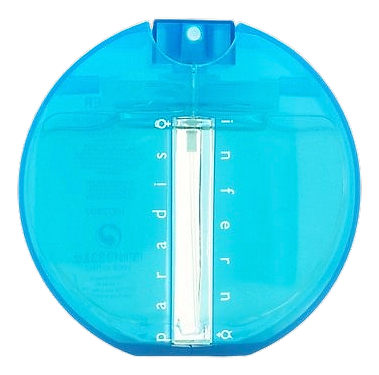
Paradiso Inferno Blue arrived in 2001 from Benetton's fragrance division, designed to capture the energy of Mediterranean coastal life in scent form. The Paradiso name, paradise, signals the brand's chromatic optimism applied to escapism, while the Inferno label suggests something with more heat than the typical blue aquatic. Valerie Garnuch-Mentzel built the composition around a tension between cool marine freshness and warm woody depth, a contrast that gives the fragrance its identity without relying on complexity. It was positioned as a bright, daytime men's scent that could transition from a morning commute to an evening aperitivo without friction. The idea was simple: clean, warm, uncomplicated, a fragrance that fits a life rather than performing for one.
What makes Paradiso Inferno Blue structurally interesting is the marine-lime top married to geranium, a pairing that gives the opening a green-citrus sharpness rather than the sweet aquatic fruit that dominated men's fragrances in the same era. The heart introduces jasmine and ginger, white floral warmth with a hint of spice, creating a middle phase that feels warmer than the name suggests. Then the base anchors everything with cedar, sandalwood, and vetiver, a woody triad that gives the drydown staying power and a powdery, clean finish the wearer notices for hours. The composition doesn't reinvent anything, but the progression from cool aquatic to warm woody is executed with genuine clarity.
The evolution
The opening hits immediately, a sharp burst of lemon and marine salt that reads clean and sharp, the kind of citrus that cuts through morning fog or evening humidity without apology. Geranium adds a green, slightly bitter undertone that prevents the top phase from feeling sweet. This phase lasts about thirty minutes before the jasmine emerges, softer than expected, threading warmth through the aquatic backbone rather than replacing it. Ginger and cyclamen arrive next, giving the heart a spiced, slightly powdery character that moves the fragrance away from pure freshness and toward something more textured. The transition into the drydown is where this scent earns its longevity. Cedar and sandalwood arrive around the two-hour mark and settle in, their woody warmth wrapping around the fading floral and citrus notes. Amber and musk finish the composition, leaving a clean, powdery warmth on the skin that persists for the remaining hours. On clothing, the cedar lingers longest, detectable the next morning as a faint, pleasant woody trace.
Cultural impact
Paradiso Inferno Blue belongs to the wave of aquatic men's fragrances that defined 2001, the era of blue bottles, marine notes, and lemon-lime openings that reshaped mass-market masculine scent. It shares that period's DNA with countless other "blue" fragrances, but its geranium-spiced heart and cedar drydown set it apart from the sweeter, more synthetic contemporaries. For wearers who remember the era, it carries a specific nostalgia, that pre-smartphone Mediterranean optimism encoded in scent. For newer audiences, it offers a cleaner, less exaggerated take on the genre than most modern releases.