The Story
Why it exists.
The beginning
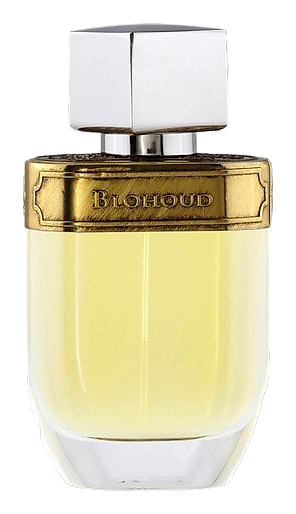
Blohoud arrived in 2017 from Giovanni Festa, the perfumer behind its sharp floral-woody construction. That matters because the composition refuses the usual neat categories. Jasmine gives the opening a clean white-floral lift, while lavender cools the arrangement without making it feel polite. Patchouli and cedar introduce dry wood and earthy depth through the middle and later stages. Amber and oud then pull the fragrance into a warmer, resinous register. There is no verified story behind the name or a documented personal inspiration, so the composition itself is the strongest place to start: a study in contrasts, placed on skin and left to unfold.
The unusual part is how many textures share the same small stage. Jasmine and lavender create a clean aromatic opening, with a cool, almost medicinal edge as the flowers settle. Patchouli and cedar bring a dry, grounded middle, while amber and oud make the base warmer and more tactile. The result moves between floral, woody, powdery, sweet, and resinous territory. That gives Blohoud an appealing sense of movement without losing its central character.
The evolution
The first impression is a clean aromatic snap, with jasmine and lavender forming a bright opening. As it settles, the composition becomes drier and more tactile. Cedar gives it a pale wooden grain, while patchouli deepens the center with an earthy, almost smudged quality. Then amber and oud take over. The sweetness is no longer simple, and the wood gains a darker, resinous edge. What lingers is the contrast between cool lavender and warm oud, with jasmine still hovering beneath the surface. The opening gradually gives way to a woody amber character. Patchouli makes the middle feel more grounded, while oud adds depth and a subtle smoky richness. Together, the notes create a composition that feels both airy and close, changing without becoming abrupt.
Cultural impact
Blohoud is a fragrance defined by its shifting note structure and its refusal to settle into one simple category. Jasmine and lavender establish a clean floral opening, while patchouli and cedar introduce dry wood and earthy texture. Amber and oud then give the composition a warmer, resinous base. Together, these notes create a sequence of impressions: lifted flowers, cool aromatics, grounded wood, soft spice, sweetness, and darker depth. For anyone interested in fragrance as a study of contrasts, Blohoud offers a composition to examine on skin, following the way each element changes as the scent unfolds.
The House
AulentissimaAulentissima is an independent fragrance house that emerged in the late 2010s, offering a catalogue that reads like a laboratory notebook of scent experiments. Its releases – Issimamenthae (2017), Rose and Beer (2020), O.H.V. Gutt B. (2022), Zacamutra (2020), Il Velo di Maia (2020), Spóros (2020), Jardin de Marrakesh (2017), Amande (2017), Black Woman (2017) and Men in Roses (2017) – span a range of aromatic concepts from botanical abstractions to urban narratives. The brand positions itself as a conduit for curious noses, inviting collectors to explore compositions that often juxtapose unexpected ingredients. While the label does not publish a traditional corporate history, its body of work suggests a commitment to pushing the boundaries of modern perfumery without relying on overt marketing slogans.
The Creator
Giovanni FestaIn the lab Festa favors a linear construction: a clear opening, a heart that expands, and a base that settles like stone. He often begins with a single botanical note—often a citrus or a rare rose—and builds layers of supporting accords that echo the primary scent without over…