
The Story
Why it exists.
The beginning
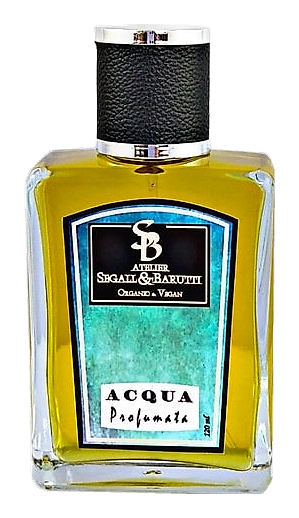
Tzívia Segall designed Acqua Profumata in 2019 with a single question: what does water actually smell like? Not the calone-laden stereotypes of mainstream aquatic fragrances, but the thing itself, humidity, the moment before rain, the green scent that rises when heat meets moisture. The name means perfumed water, but the composition is a rejection of the expected. Segall reached for green and ozonic to find the aquatic, not the other way around.
The note structure is unusual for a fragrance with water in its name. Galbanum, a green resin with an almost invasive freshness, pushes against the citrus brightness. Hedione amplifies the florals into something luminous rather than heavy. Osmanthus adds a quiet apricot note that most wearers miss but that stops the composition from feeling purely fresh. Together, these materials create green without aggression, aquatic without stereotype, and a longevity that justifies the 2019 release date on any wrist.
The evolution
The opening hits crisp and bright, bergamot and Sicilian lemon cutting through, with galbanum adding an herbaceous bite that reads as almost medicinal. Astringent. The green stays sharp for the first twenty minutes, then something cooler arrives as violet leaf emerges alongside the orange blossom. The citrus softens but doesn't disappear. A dewy quality settles in, cool air over warm skin. The drydown shifts into musk and amber warmth, with patchouli grounding everything. Peru balsam adds a faint sweetness that prevents the base from feeling austere. The ozonic quality never becomes synthetic marine. It's mist, not ocean. Six to eight hours on skin, with moderate sillage throughout.
Cultural impact
Acqua Profumata occupies an unusual position: a fragrance named for water that refuses the typical aquatic route. Where most aquatics rely on calone or similar synthetic marine materials, Segall pursued the ozonic through green, galbanum, violet leaf, and hedione interacting to create a sensation of humidity rather than a smell of ocean. The approach reflects the house's broader philosophy of treating fragrance as narrative rather than mood. Wearers who have grown skeptical of mainstream aquatics often find this version earns back the category's credibility.
The House
Atelier Segall & BaruttiAtelier Segall & Barutti is a niche fragrance house that builds its reputation on daring compositions and a willingness to explore unconventional scent structures. The brand’s catalogue, which stretches from the early 1990s to the present, includes more than 80 distinct creations, each positioned as a character study rather than a conventional perfume. Its releases—such as Rose Indian (2016) and Cyprus (2022)—show a consistent focus on narrative depth and material authenticity.
The Creator
Tzívia SegallHer signature technique involves layering transparent accords before anchoring them with a modest base of woods or resins. She prefers citrus zest, marine notes, and green herbs for top layers, then adds soft florals such as freesia or violet leaf.