
The Story
Why it exists.
The beginning
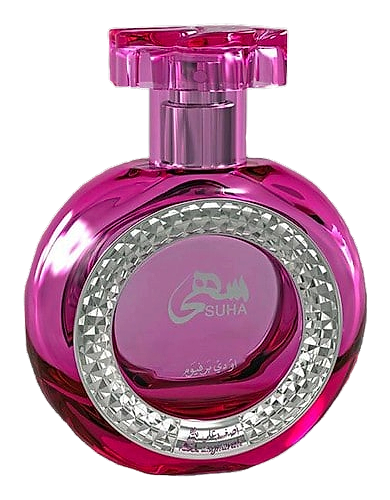
Suha sits within Asgharali's catalogue of bottled florals, a line the house carries alongside their traditional attar offerings. It reads as a direct descendant of that broader effort: a floral-green composition built on jasmine, rose and lily of the valley, dressed with fruity aldehydes at the entrance and grounded in the cedar-sandalwood-musk base that anchors the formula. The aldehyde-fruity opening lifts the bouquet before the white florals take hold, and the green facets keep the whole thing from feeling too heavy or too sweet. There's a clarity in the way the notes stack, almost architectural, with the florals serving as the main body and the woods and musk functioning as the foundation.
What separates Suha from the usual floral-green is the aldehyde-led opening, handled here without sacrificing the natural-botanical character the brand is known for. The fruity notes at the top are a deliberate nudge toward brightness, offsetting the heavier white-floral heart so the composition never quite tips into syrup. That tension between the airy, almost sparkling top and the dense floral middle is what gives Suha its particular shape, a lightness over a weight that keeps things from ever feeling cloying. The base is where the composition finds its footing.
The evolution
The first quarter hour belongs to the aldehydes, bright and slightly soapy, pulling the fruity and green facets into something almost sparkling. By the thirty-minute mark, jasmine and rose arrive with lily of the valley, and the aldehydes recede into a soft halo behind them. The florals hold the middle stretch for roughly two hours, gaining a powdery edge as they settle into the skin. There's a particular moment, somewhere around the ninety-minute mark, where the bouquet reaches its fullest expression, the white florals at peak bloom but still supported by that green undertone from the opening. As the composition moves past its midpoint, the cedar and sandalwood rise, patchouli threading underneath, and the musk rounds everything off. The drydown is quiet, close to skin, and unmistakably woody-powdery.
Cultural impact
Suha carries the clear DNA of a Gulf floral, with its structural reliance on jasmine, rose, cedar, sandalwood and musk, but it wears that lineage lightly. The aldehyde-fruity opening and the green facets give it a brightness that feels less heavy than a traditional attar, opening the composition to contexts and climates where an oil-based fragrance might feel too dense. The woody-powdery drydown keeps it tethered to the kind of base structure that's long been associated with regional perfumery, rather than drifting into something purely Western in its vocabulary.