
The Story
Why it exists.
The beginning
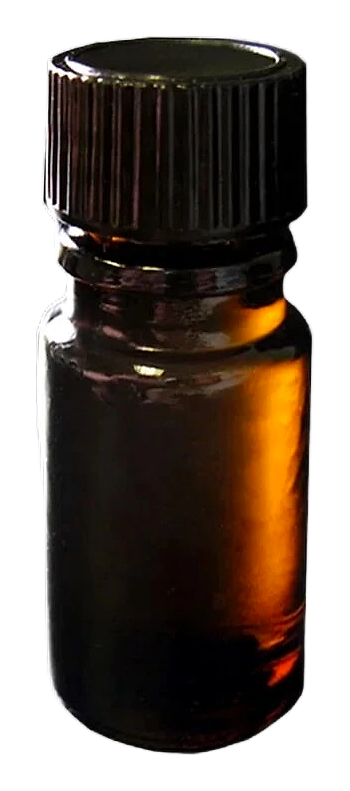
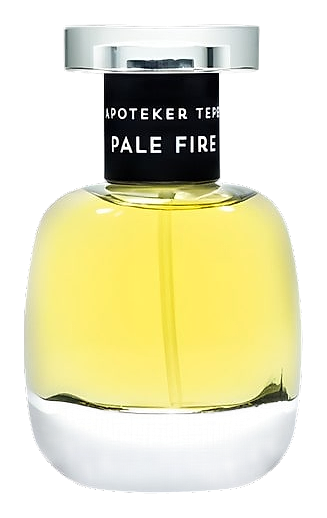
Pale Fire takes its name from Vladimir Nabokov's novel, a poem framed as a translation, a narrative that exists between what's written and what's meant. Holladay Saltz built this fragrance around the same tension: amber, the first perfume note ever built from chemistry rather than nature, reconstructed here with actual materials. Spanish labdanum absolute and a supercritical extraction of Tahitian vanilla replace the fantasy accord with something tangible. The result carries the Portuguese concept of saudade, the feeling that remains after something beautiful disappears. It's amber interrogated, then rebuilt from the inside out.
Amber's history is synthetic by design. Created in the early 20th century when perfumers wanted the warmth of fossilized resin without the cost or inconsistency, the amber accord became a construction of labdanum derivatives and other aromatic compounds. Beautiful, but artificial, an olfactory illusion of captured sunlight. Pale Fire takes the amber accord as its starting point but strips out the shortcuts.
The evolution
The opening arrives warm and slightly boozy, whiskey cutting through the cocoa's powdery darkness. The amber surfaces fast, but here it's smoother, more resinous than sharp. There's a quiet incense quality from the frankincense, never loud, more like a church candle three rooms away. The oakmoss enters adding that mossy, slightly medicinal backbone that prevents the sweetness from taking over. Spanish labdanum absolute weaves through the heart, its sweet-balsamic-animalic complexity giving the composition real texture. The vanilla doesn't announce itself. It seeps. As the hours progress, it becomes the dominant warmth, but still grounded by everything underneath. The drydown is where it earns its name, a lingering warmth that stays close to the skin, intimate rather than announced, fading like the last light before dark. On fabric, expect substantial longevity.
Cultural impact
Pale Fire occupies a specific corner of the indie fragrance world, among those who've moved past mainstream amber compositions and want something that questions its own materials. The house's approach to fragrance as intellectual inquiry attracts wearers who read, who notice. It's not discussed in mainstream fragrance culture the way the major houses are. That suits it fine.