The Story
Why it exists.
The beginning
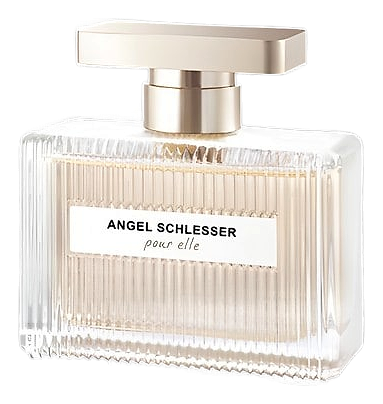
When Angel Schlesser set out to capture 'pour elle,' the brief was deceptively simple: define the woman you can't look away from. Not the one who arrives loudly. The one whose quiet presence somehow fills the room. Perfumer Amandine Clerc-Marie worked from that intangible quality, translating it into a composition of bright citrus, red berries, and a white floral heart that reads as natural radiance rather than performance. The 2014 launch was the brand's answer to a question nobody had quite articulated yet, what does effortless beauty smell like when you strip away the obvious?
The note structure here is doing something clever. Citrus and red berries open loud and juicy, almost confectionery, then hand off to a heart of jasmine, orange blossom, and peony that feels intimate rather than brash. The real interest sits in that transition: how the bright, almost sparkling top dissolves into something creamy and skin-close. It's a composition built around contrast, sparkle versus warmth, the initial impression versus what remains two hours later.
The evolution
The citrus-red berry opening hits sharp and immediate. Bergamot and grapefruit arrive clean, the mandarin adds a soft roundness, and the red berries bring a jammy sweetness that keeps the whole thing from reading as just another citrus fragrance. About 15 minutes in, the white florals take over. Jasmine and orange blossom push forward, not as a wall of scent but as a warm, almost creamy presence that replaces the initial sparkle. The peony adds a slight powdery lift without tipping into softness. This middle phase holds for several hours. Eventually the base arrives: tonka bean and patchouli, with vetiver adding a mineral, earthy counterweight. The drydown is warm, intimate, close to the skin. The tonka bean keeps a quiet sweetness alive. The vetiver ensures it never becomes cloying.
Cultural impact
Angel Schlesser Pour Elle entered a fragrance landscape dominated by French and Italian luxury houses as a distinctively Spanish voice. The brand, founded by Paloma Sánchez in 1992, built its identity around Mediterranean simplicity and accessible luxury, challenging the notion that quality perfumery required French heritage. Pour Elle arrived during a period when the mass-market segment was expanding rapidly, offering consumers refined options without the stratospheric pricing of niche houses. The fragrance's emphasis on natural ingredients and understated elegance positioned it as an antidote to increasingly complex and polarizing releases from competitors.