The Story
Why it exists.
The beginning
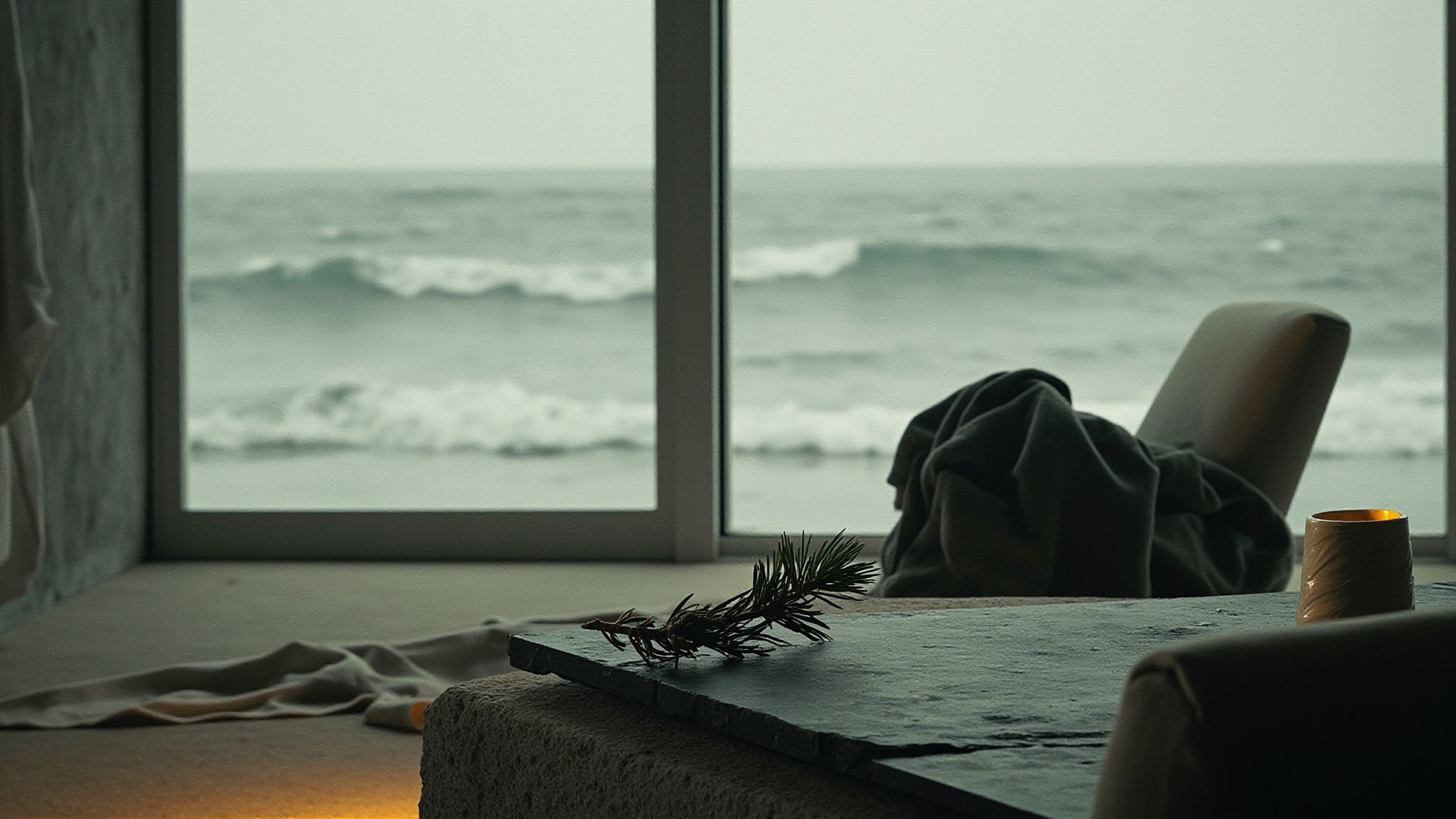
Tramuntana is named for the Tramuntana wind, the fierce northerly that roars down through the Pyrenees and across Catalonia, reshaping the coast it meets. The perfumer Jordi Magrans was commissioned to translate that wind into something wearable. Released in 2025, the fragrance reads as a study in cold air: mineral, sharp, and stripped of ornament. Magrans built Tramuntana for the moment before warmth, the landscape just before the sun returns. There's something almost geological about the composition, the way each note reads less like an ingredient and more like a layer of terrain. The metallic facets cut like exposed rock, the marine accord moves underneath like seawater pooling in a crevasse, and the whole thing carries the hush of a coastline under pressure.
What's interesting is how stripped the composition is. Marine, metallic, and ozonic notes do most of the talking, with pine as the only familiar anchor. There's no amber, no resin, no sweetness to soften the edges. Tramuntana runs the other direction, toward cold metal and high altitude. The pine matters here, it's the thread that keeps an almost-abstract marine-ozonic structure from floating away entirely. The interplay between the green of the pine and the grey-blue of the marine accord creates a strange tension, something between a forest at altitude and a shoreline in winter.
The evolution
The opening lands sharp, a cool blade against skin where metallic and ozonic notes cut through the air with startling clarity. Marine notes swell underneath, and there's a saline, almost static charge to the whole opening, like the atmosphere before lightning. Pine arrives early in the heart phase and earns its place as the only organic element in an otherwise mineral composition. It reads green but cold, resinous but distant, holding its own against the surrounding notes without ever tipping into warmth. As the hours pass, the metallic edge softens but never fully leaves. The ozonic lift fades gradually, and what remains is woody notes and a ghost of pine, close to the skin, faintly saline. On fabric the next morning, the woody-mineral trace lingers like the memory of wind through an open window.
Cultural impact
Tramuntana sits at the cold end of the spectrum, a composition that prizes abstraction and altitude over comfort and warmth. It rewards wearers who want their fragrance to evoke weather rather than temperature, the feeling of being exposed rather than sheltered. There's something almost cinematic about how it reads on skin, less a personal scent and more a place you've stepped into. It invites curiosity from anyone drawn to mineral compositions, to the cold edge of perfumery where resin and sweetness give way to metal, salt, and open air.