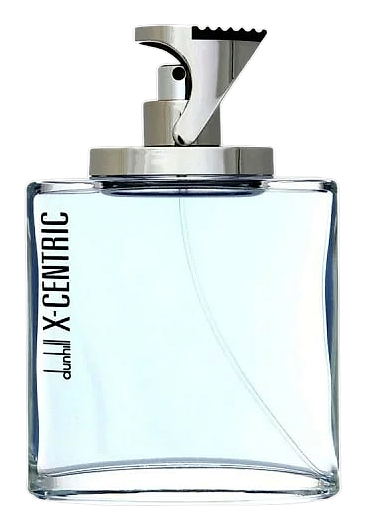

The Story
Why it exists.
The beginning
X-Centric arrived in 2001, crafted by Maurice Roucel and Frank Voelkl for a man who didn't need his fragrance to speak for him. The creation offered something that opens with conviction and settles into quietude. Its initial burst of citrus and spice gradually softens, revealing a drydown that sits close to the skin, warmer and more intimate as hours pass. Not a fragrance for introductions. For everything after. The composition rewards patience, revealing its depth not through projection but through the subtle way it evolves on the wearer throughout the day.
X-Centric inverts that expectation. The top accord, seven materials including grapefruit, clary sage, cardamom, and a flicker of cinnamon, functions less as a statement and more as a controlled burn. By the time the heart of lotus and freesia arrives, the composition has already begun its slow retreat toward the skin. The base does the real work: guaiac wood and sandalwood anchoring the musk, patchouli adding a faintly herbal counterpoint that keeps the warmth from becoming sweet.
The evolution
The opening hits quick, grapefruit and green notes cutting through in the first thirty seconds, sharp and almost astringent before the cypress and clary sage round the edges. Within minutes the spice fades and the freesia arrives, unexpectedly floral against the green. This is where X-Centric reveals its trick: the heart smells like it's from a different fragrance entirely, softer, more delicate, almost powdery. The cedar and lotus hold court for the next two to three hours, doing the quiet work of making the whole composition feel considered rather than constructed. Then the base takes over: sandalwood and guaiac wood warming up against the skin, musk settling into something that smells like skin but better. By hour six, what's left is a faint warmth on the inside of the wrist, close enough to find if you're looking, invisible to everyone else.
Cultural impact
X-Centric offered something quieter: a woody aromatic that asked to be worn rather than noticed. Instead of competing for attention, it established itself through a drydown that felt considered rather than constructed. What kept people returning wasn't the opening or the sillage, both moderate, but the way the base materials of guaiac wood, sandalwood, and musk created a warm, enveloping presence that lingered on the skin. The fragrance developed a following among those who appreciated its restraint, its ability to provide presence without demanding notice.